
✈️ TSA Travel Verified
👩👧 Mom Approved
How to Warm a Baby Bottle on the Go (Travel Hacks for Moms) – There are few things more stressful for a new parent than being stuck in a moving car, an airplane cabin, or a busy shopping mall with a screaming, hungry baby and an ice-cold bottle of milk.
At home, you have your perfectly sanitized kitchen and your trusty electric bottle warmer ready to save the day. But out in the wild, logistics become incredibly complicated. How do you heat a bottle without an electrical outlet? Are you allowed to bring ice packs through airport security? Is it safe to ask a barista to heat your baby’s milk?
Learning how to warm a baby bottle on the go is an absolute survival skill that requires pre-planning and the right portable gear. While older babies might tolerate drinking cold milk straight from the cooler bag, most infants—especially those used to the cozy 98.6°F temperature of breast milk—will adamantly refuse a chilly meal.
In this comprehensive travel guide, we will break down the absolute best portable warming methods, the critical differences between traveling with formula versus breast milk, and exactly how to navigate TSA security checkpoints with a hungry infant.
Understanding TSA Rules: Flying with Baby Milk
If you are planning to fly, your biggest hurdle is getting your milk and warming supplies through the security checkpoint. The Transportation Security Administration (TSA) has a strict “3-1-1 liquids rule” for normal passengers, but families traveling with infants are granted crucial medical exemptions.
✈️ The “Medically Necessary” Exemption
Formula, expressed breast milk, toddler drinks, and baby food are considered medically necessary liquids. You are allowed to bring them in quantities greater than 3.4 ounces (100ml) in your carry-on baggage. Furthermore, you are fully permitted to bring ice packs, freezer packs, and gel packs to keep these items cold, even if the packs are partially melted.
Pro Travel Tip: Always tell the TSA officer at the beginning of the screening process that you are carrying baby milk and ice packs. They will need to screen them separately, often by swabbing the outside of the bottles for explosive residue. Allow an extra 15 minutes for this process.
3 Proven Methods to Warm Bottles While Traveling
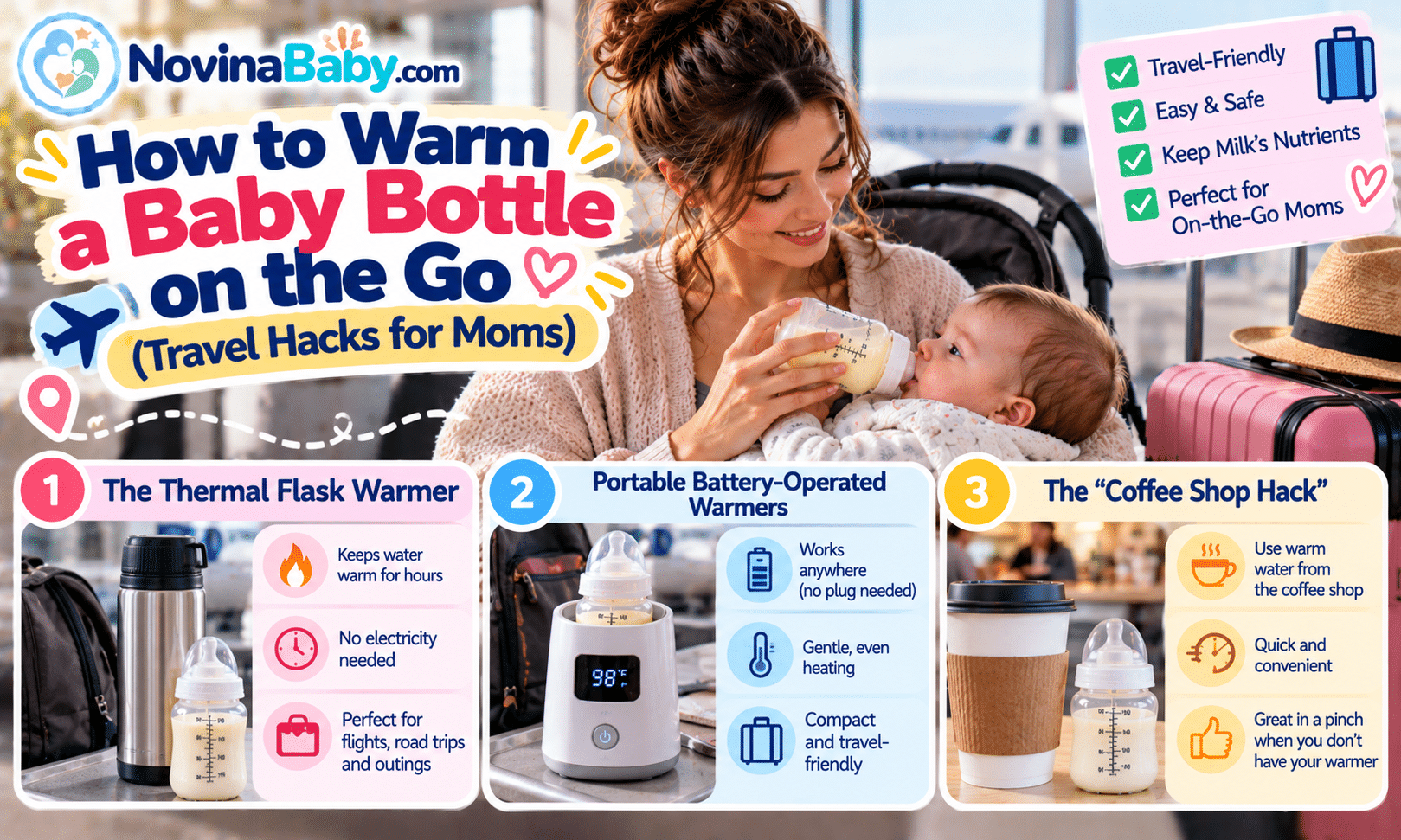
Once you are safely on the road or in the air, you have three primary methods to safely raise the temperature of your baby’s milk without relying on a dangerous microwave.
🍼 Travel Strategy: Formula vs. Breast Milk
The logistics of traveling vary wildly depending on what your baby drinks.
- Formula Feeding on the Go: This is much easier. Do not pre-mix the formula before you leave the house (pre-mixed formula spoils quickly). Instead, fill your baby bottles with perfectly warm, clean drinking water before your trip. Keep the dry formula powder in a separate dispenser. When the baby is hungry, simply dump the powder into the warm water, shake, and serve instantly. No warming required!
- Breast Milk on the Go: Because expressed breast milk must be kept cold in a cooler bag to prevent spoilage, you are forced to warm it up before feeding. You must read up on how to safely warm breast milk to ensure you do not use water that is too hot, which destroys the precious immunological properties.
How to Warm a Baby Bottle on the Go (FAQ)
Is it safe to use tap water from a public restroom to warm a bottle?
Technically, yes, because the water is only touching the outside of the sealed bottle. However, public restroom sinks harbor massive amounts of bacteria. If the bottle nipple accidentally touches the sink or the dirty water splashes onto the cap, you risk giving your baby a severe stomach infection. It is better to use the “Coffee Shop Hack” with clean, potable water.
Can I bring an electric bottle warmer on an airplane?
Yes, you can bring it in your carry-on luggage. However, standard electric warmers require a wall outlet, which you will not have access to while sitting in your airplane seat. You must rely on a battery-operated warmer, a thermal flask, or ask the flight attendant for a cup of hot water.
How long can breast milk stay safely in a cooler bag?
According to the CDC, freshly pumped breast milk can be stored in an insulated cooler bag with frozen ice packs for up to 24 hours. Once you reach your final destination, immediately transfer the milk to a proper refrigerator.
Will my baby get sick if I feed them cold milk while traveling?
No. Cold milk will not cause stomach aches or illness. If you are in a pinch and cannot warm the bottle, it is 100% medically safe to offer your baby cold milk. The only issue is whether your baby will accept it, as many infants reject the shock of cold liquid.
Gear Up for Your Next Family Vacation
Now that you know exactly how to warm a baby bottle on the go, it is time to secure the right equipment to make your next road trip or flight completely stress-free. We have rigorously tested the market to identify the absolute best portable travel warmers, high-tech battery heaters, and reliable thermal flasks available today.