
🩺 Behavioral Sleep Science
📅 Updated for 2026
When Do Babies Get Scared of The Dark – For the first year of your baby’s life, the darkness was your best friend. You installed expensive blackout curtains, taped over tiny LED power indicators, and kept the nursery as pitch-black as a cave. Your baby slept peacefully because, to an infant, darkness signals rest.
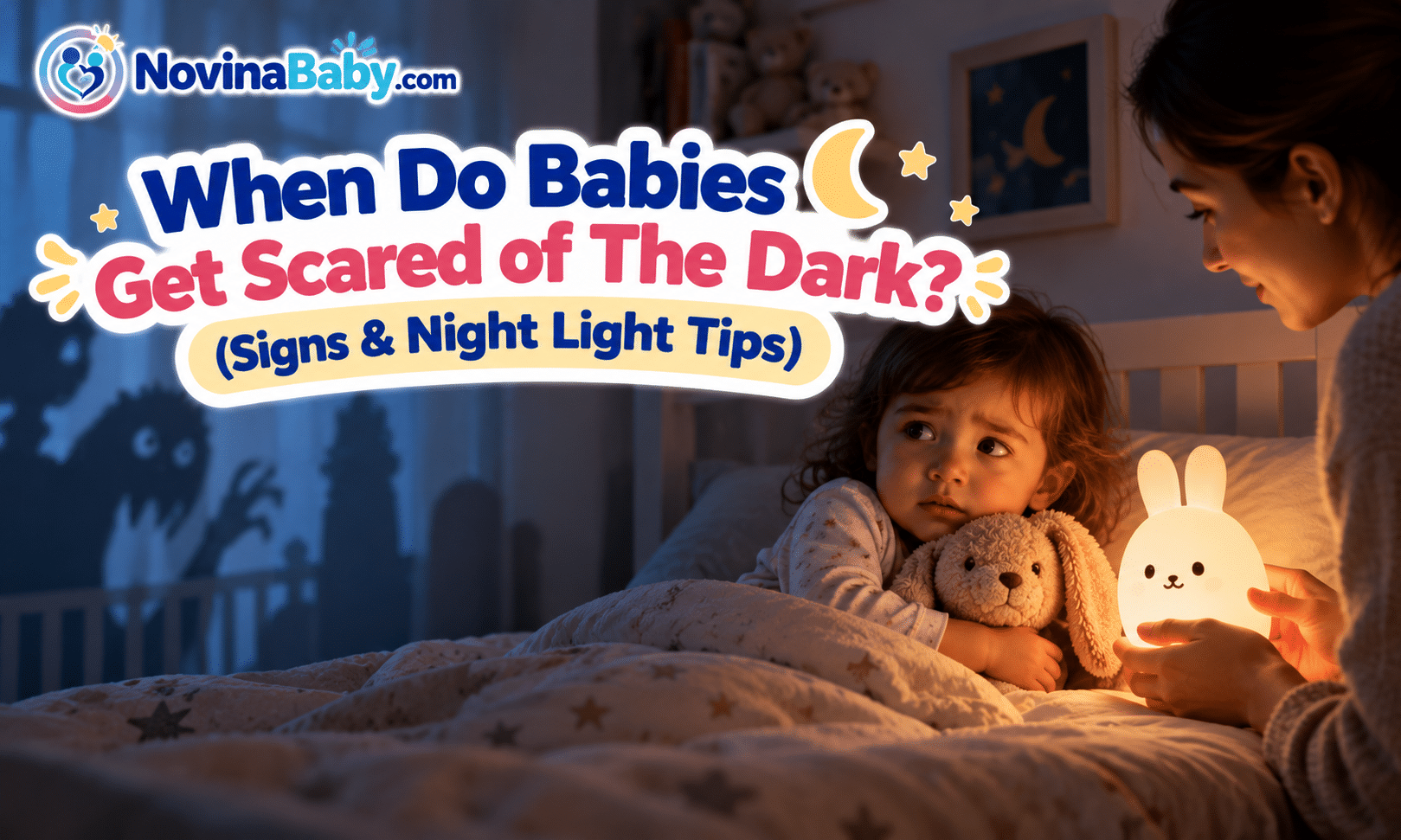
But suddenly, somewhere around their second birthday, the script flips. Your previously excellent sleeper begins clinging to your leg during the bedtime routine. When you reach for the light switch, they panic. They point to the dark corner of the room, stall for time, and cry out the moment you close the door.
If you are confused by this sudden nighttime terror, rest assured that you have not done anything wrong. Your child is experiencing a massive, completely normal developmental milestone.
Understanding when babies develop a fear of the dark requires a look into their rapidly expanding cognitive abilities. Let’s break down why newborns are fearless, how to distinguish true fear from a standard sleep regression, and the exact steps to introduce a pediatric-approved comfort night light.
The Cognitive Leap: Why Newborns Aren’t Scared (But Toddlers Are)
As we established in our guide on whether newborns actually need a night light, infants under 12 months old are neurologically incapable of being afraid of the dark. They lack the two cognitive functions required to generate fear: object permanence and imagination.
However, between 18 months and 3 years of age, your toddler’s brain undergoes an explosive cognitive leap.
- The Rise of Imagination: Around age two, children start engaging in pretend play. They realize that things exist outside of their immediate reality. Unfortunately, this incredible new superpower has a dark side: if they can imagine a magical flying fairy, they can also imagine a monster hiding in the closet.
- Object Permanence: They now understand that just because they cannot see something in the dark does not mean it isn’t there. A pile of laundry on a chair is just laundry in the daylight, but in the dark, their blooming imagination fills in the visual gaps, turning a shadow into a threat.
- Increased Independence (and Vulnerability): Toddlers are becoming more independent during the day, which ironically makes them feel more vulnerable at night when separated from their primary protectors (you).
4 Signs Your Child is Genuinely Afraid of the Dark
Not every 2-year-old who fights bedtime is afraid of the dark. Many toddlers simply experience the notorious 18-month or 2-year sleep regression—a phase characterized by testing boundaries, FOMO (Fear Of Missing Out), or a changing nap schedule.
How do you know if it is a genuine fear of the dark rather than a standard regression? Look for these four specific behavioral markers:
1. The “Light Switch Panic”
A child experiencing a boundary-testing regression will cry after you put them in the crib and leave. A child afraid of the dark will begin panicking the exact second your hand touches the light switch to turn off the overhead lights, physically trying to stop you.
2. Pointing to Specific Shadows or Corners
Instead of generalized crying, a fearful toddler will often fixate on a specific part of the room. They might point to the closet door, stare nervously under the crib, or express distress about a specific toy’s shadow on the wall.
3. Verbalizing “Monsters” or “Scary Things”
If your child’s vocabulary has developed enough, they will explicitly tell you. You might hear phrases like “scary,” “no dark,” or “monster.” Pay attention to the media they consume; sometimes a slightly intense cartoon triggers these nighttime fears.
4. Instant Relief When Re-Illuminated
If you turn the hallway light back on or open the door a crack, the hysterical crying immediately stops, and they visually relax. A toddler having a tantrum because they want to go play in the living room will continue screaming even if the lights are on.
How to Introduce a Comfort Night Light (Without Ruining Sleep)
Once you confirm your toddler is genuinely afraid of the dark, the solution is straightforward: introduce a comfort night light. However, you must do this strategically. Throwing a bright white lamp into the room will cure the fear of the dark but completely destroy their melatonin production, leading to terrible sleep.
Step 1: Choose the Right Color (Red or Amber)
As we proved in our clinical guide to red light vs blue light for baby sleep, short-wavelength blue, green, and white lights suppress the sleep hormone melatonin. When shopping for a toddler comfort light, select a soft silicone tap light or smart lamp that can be locked onto a warm amber, orange, or deep red hue. This provides enough illumination to banish scary shadows without interfering with their brain’s sleep chemistry.
Step 2: Make the Light a “Sleep Buddy”
Toddlers respond incredibly well to personification. Don’t just place a lamp on the dresser. Buy a squishy, child-safe silicone animal light (like a glowing bear or duck) and introduce it during the daytime.
Give the light a name. Say, “This is Barnaby the Bear. His special job is to glow softly and keep all the shadows away while you sleep. He is your nighttime protector.” By giving the toddler ownership and a sense of partnership with the light, you empower them.
Step 3: Teach Them How to Control It
Fear of the dark is ultimately a fear of the unknown and a lack of control. By placing a cordless tap light safely on their nightstand, you give them the power to control their environment. Teach them how to tap the silicone shell to turn the light on if they wake up scared. (Note: Only do this once they are out of a crib and in a toddler bed; never put items inside a crib).
🚫 What NOT to Do When Your Child is Scared
- Don’t Dismiss It: Never say, “Don’t be silly, there’s nothing there.” To your toddler, the fear is 100% real. Validate it by saying, “I see you are feeling scared of the dark. I will help you feel safe.”
- Don’t Look for Monsters: Do not open the closet and say, “See? No monsters!” This implicitly validates that monsters could exist and that you actively have to check for them.
- Don’t Use Busy Star Projectors: While mesmerizing, swirling galaxy projectors often backfire. As we explain in our comparison of star projectors vs soft glow night lights, moving lights trigger the visual orienting reflex and can cast even stranger, scarier shadows on the walls.
When Do Babies Get Scared of The Dark (FAQ)
How long will my child’s fear of the dark last?
Nyctophobia peaks between ages 2 and 4, but can linger in milder forms until ages 8 or 9. As their logical brain develops and they realize that their imagination isn’t reality, the fear naturally subsides. Providing a consistent, comforting environment helps them outgrow it faster.
Can I just leave the hallway light on and crack the bedroom door?
You can, but it is often less effective than a dedicated night light. Hallway lights are usually bright, cool-white bulbs that suppress melatonin. Furthermore, a cracked door casts a harsh, long beam of light into the room, which creates deeper, scarier shadows in the corners of the bedroom.
Can an “Okay-to-Wake” clock also serve as a comfort night light?
Yes, perfectly! Smart hubs like the Hatch Rest are excellent dual-purpose tools. You can program the clock to glow in a soft, comforting amber all night to banish the dark, and then automatically switch to green at 7:00 AM. Read our full guide on how to use an okay-to-wake clock for the best toddler schedules.
Banish Bedtime Fears With the Perfect Comfort Light
Empowering your toddler with a safe, cordless comfort light can turn a terrifying bedtime routine back into a peaceful transition. We tested the most adorable, CPSC-certified silicone tap lights and smart nursery lamps that glow in melatonin-safe colors.
Read Our Ultimate Guide on the Best Baby Night Lights of 2026