
🛡️ CDC Hygiene Standards
👩👧 Mom Approved Hacks
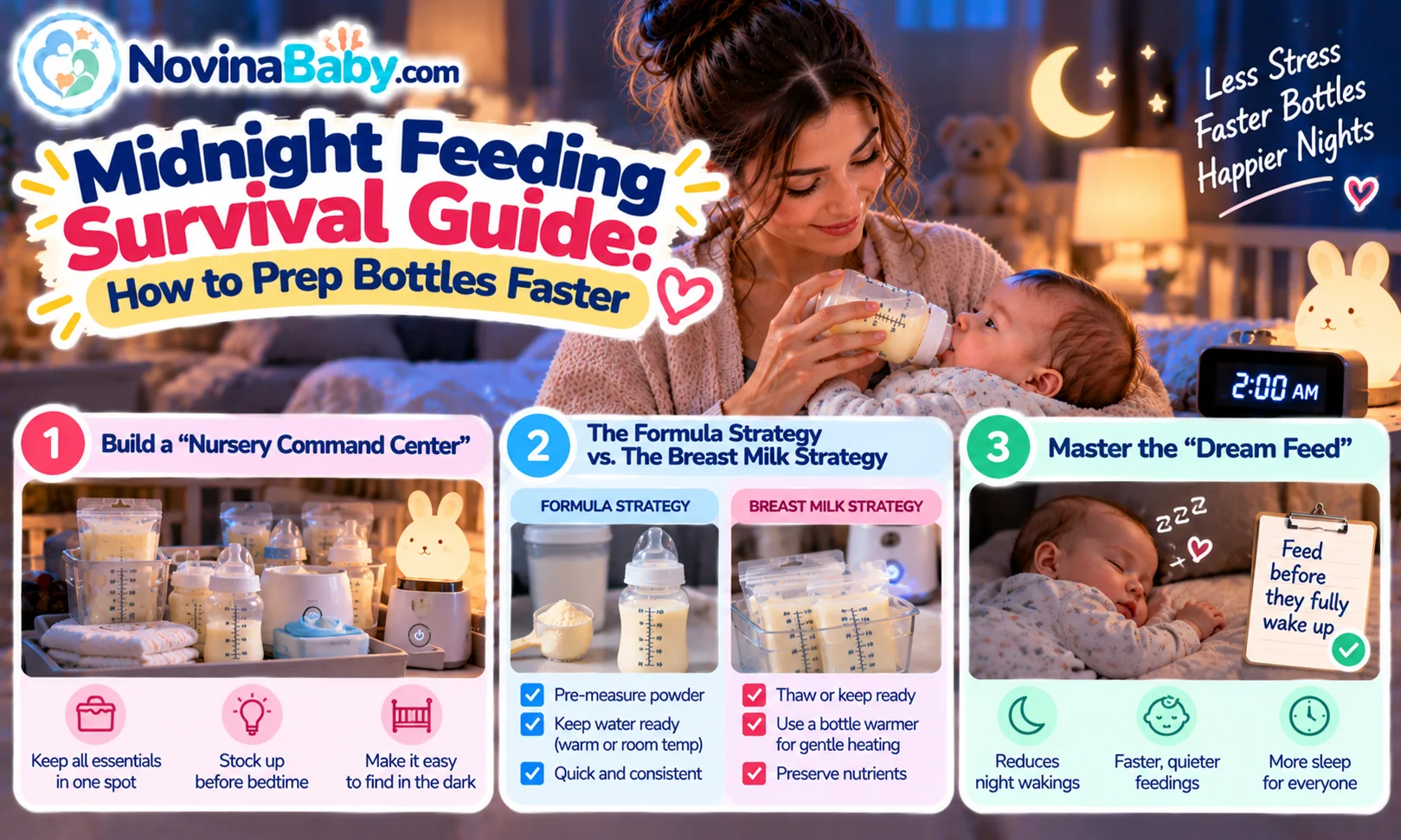
Midnight Feeding Survival Guide – When you bring a newborn home, sleep deprivation hits you like a freight train. There is nothing quite as agonizing as being jolted awake at 3:00 AM by a screaming, hungry baby, only to realize you have to stumble into a freezing kitchen, measure out water, and wait five excruciating minutes for a bottle warmer to do its job.
In those early months, every single minute of sleep is precious. If a feeding takes 45 minutes instead of 20, your own ability to function the next day drops drastically.
Surviving the newborn phase requires treating midnight feedings like a strategic military operation. You need a system that minimizes your physical movement, preserves your sleepy state (and your baby’s), and delivers a perfectly warmed meal as fast as humanly possible.
From setting up a decentralized nursery command center to mastering the “Dream Feed,” here is your ultimate, pediatrician-approved midnight feeding survival guide to get you back to bed faster.
Step 1: Build a “Nursery Command Center”
The biggest time-waster during a night feed is walking all the way to the kitchen. The bright overhead lights wake you up fully, destroying your melatonin levels, and the distance extends the time your baby spends crying in their crib.
You need to bring the kitchen to the nursery. Set up a dedicated cart or a cleared-off dresser top specifically for overnight feeding supplies.
🎒 What Goes in the Command Center?
- A Smart Bottle Warmer: Keep a low-profile, auto-shutoff bottle warmer plugged in right next to your rocking chair. Fill the water reservoir before you go to sleep.
- Pre-Filled Bottles (Water Only): If you use formula, fill 2 or 3 bottles with the exact amount of sterilized, room-temperature water you will need for the night.
- A Formula Dispenser: Pre-measure your formula powder into a segmented travel dispenser. At 3 AM, you will just dump the powder into the pre-filled water bottle and shake. No scoop counting required!
- A Red-Light Nightlight: Swap out bright white lamps for a dim red or amber light. Red light does not disrupt melatonin production, making it significantly easier for both you and the baby to fall back asleep.
Step 2: The Formula Strategy vs. The Breast Milk Strategy
Your preparation method changes entirely depending on what your baby drinks. You cannot use the same hacks for formula as you do for breast milk without risking severe bacterial contamination.
The Formula Speed-Hack (The 24-Hour Warmer)
As we detailed in our guide, does baby formula need to be warmed, mixing cold water with powder leads to frustrating clumps. The fastest way to serve formula at night is to buy a “Water Kettle Warmer.” These specific warmers boil water to sterilize it, then cool it down and hold it at exactly 98.6°F for 24 hours.
When the baby cries, you pour the perfectly warm water directly into the bottle, dump in your pre-measured powder, shake, and serve. The total prep time is under 15 seconds.
Warning: Never pre-mix liquid formula and leave it on the nightstand. The CDC mandates that mixed formula spoils rapidly at room temperature.
The Breast Milk Pipeline (Cooler to Warmer)
Breast milk is a living fluid that must be kept cold to preserve its antibodies. You cannot use the kettle hack. Instead, you need a “pipeline.”
- Place a small insulated cooler bag next to your bottle warmer in the nursery. Pack it with hard ice packs.
- Store your pre-portioned bottles of pumped breast milk inside the cooler before you go to bed. (The CDC states breast milk is safe in a cooler with ice packs for up to 24 hours).
- When the baby wakes, move one bottle directly from the cooler into the bottle warmer.
To ensure you do not destroy the vital nutrients while rushing, review our strict guidelines on how to safely warm breast milk without overheating it.
🚫 Dangerous “Time-Saving” Hacks to Avoid
In the depths of exhaustion, parents often resort to shortcuts that put their babies at risk. You must avoid these mistakes parents make when warming baby bottles:
- The Microwave: Never run to the kitchen and microwave the bottle to save 3 minutes. It creates severe hot spots that will burn your baby’s esophagus.
- Prop-Feeding: Never prop a bottle up with a blanket or pillow so you can fall back asleep while the baby eats. This is a massive choking and aspiration hazard.
- Reheating Leftovers: If the baby only drinks half the bottle, do not leave it on the nightstand to feed them again two hours later. Bacteria from their saliva multiplies rapidly in warm milk. Dump it out.
Step 3: Master the “Dream Feed”
What if you could eliminate one midnight wake-up entirely? Enter the “Dream Feed.”
A dream feed is a preemptive strike. Before you go to sleep for the night (usually around 10:30 PM or 11:00 PM), you gently pick up your sleeping baby from the crib. Without waking them up fully, you tickle their lips with the warm bottle nipple.
Babies possess a powerful, instinctual rooting and sucking reflex. In most cases, the baby will latch onto the bottle and drink a full meal while remaining almost completely asleep. Once they finish, you hold them upright for 10 minutes to burp, then lay them back down.
By filling their stomach at 11:00 PM, you push their next hunger wake-up window from 1:00 AM all the way to 3:00 AM or 4:00 AM, granting you a solid 4 to 5-hour stretch of uninterrupted sleep.
Midnight Bottle Feeding Tips (FAQ)
Do I have to burp my baby during night feedings?
Yes. Even if they are incredibly sleepy, skipping the burp will likely lead to trapped gas, which will cause them to wake up screaming in pain an hour later. Hold them upright against your chest and pat gently for at least 5 to 10 minutes before placing them back in the crib.
Can I feed my baby cold milk to save time?
Absolutely! If your baby accepts cold milk straight from the cooler bag, you have hit the parenting jackpot. Cold milk is 100% medically safe and does not cause colic. Skipping the warming step entirely is the ultimate time-saver.
Is it safe to keep a bottle warmer in the bedroom?
Yes, provided you follow basic fire safety rules. Keep it on a flat, stable surface away from blankets or curtains, and ensure the cord is completely out of reach of the crib. Always choose a model with an automatic shut-off feature so it doesn’t boil dry if you fall back asleep.
Should I change the diaper before or after the night feed?
Change the diaper *before* or *halfway through* the feeding. Diaper changes often agitate babies and wake them up fully. If you change them after they have finished eating, they will be wide awake. Changing them first allows the warm milk to soothe them back to sleep at the end of the routine.
Get Your Sleep Back Tonight
Surviving midnight feedings is all about having the right gear. A slow, outdated bottle warmer can cost you hours of sleep over a single month. We have rigorously tested the market to identify the absolute fastest, most reliable smart bottle warmers and 24-hour formula kettles designed specifically to make night feeds completely effortless.