
⚖️ Unbiased Product Comparison
📅 Updated for 2026
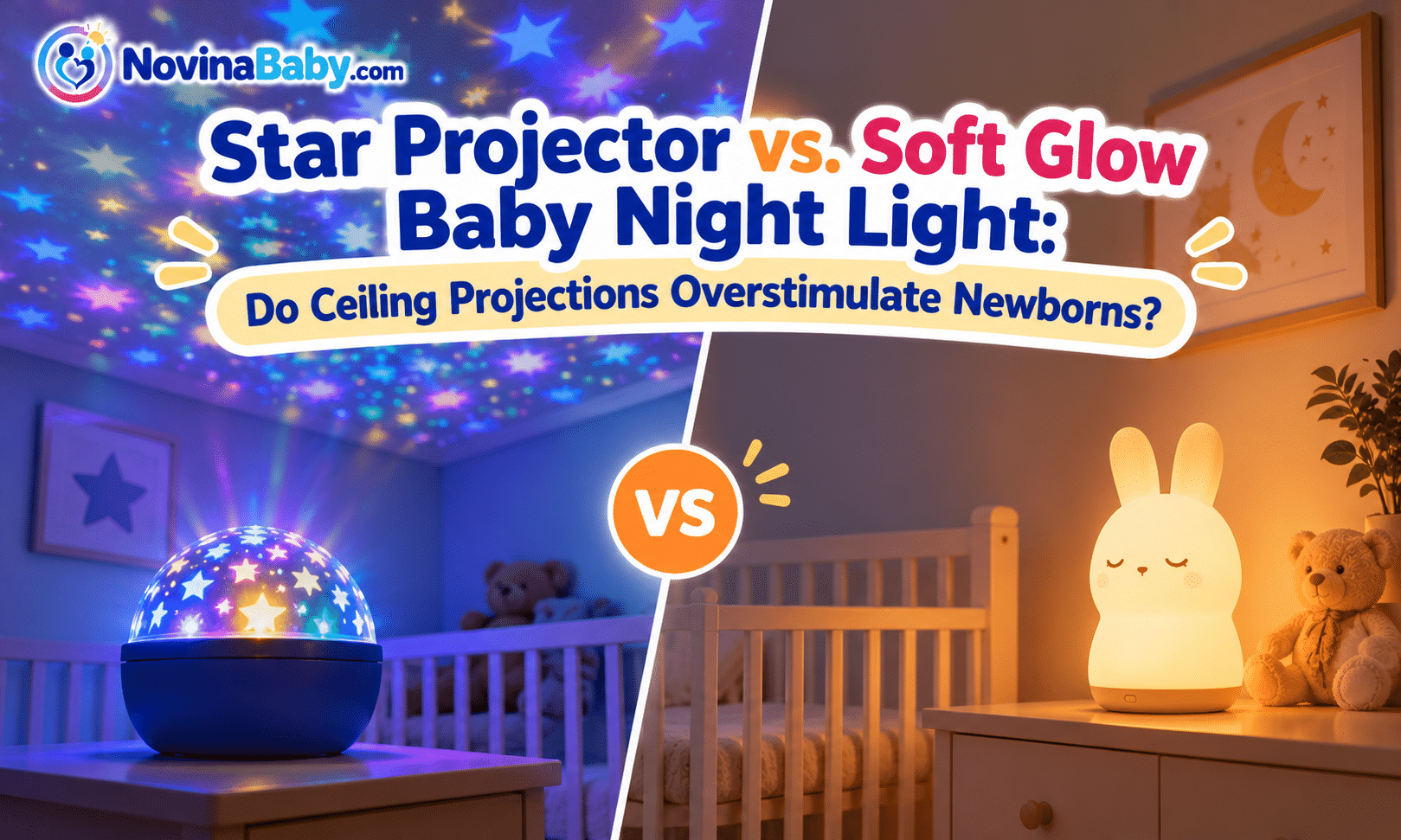
Star Projector vs Soft Glow Baby Night Light – Scroll through any curated nursery inspiration board on Instagram or Pinterest, and you are guaranteed to see it: a beautifully decorated baby room illuminated by a mesmerizing galaxy of swirling blue and green stars projected across the ceiling. They look undeniably magical, and manufacturers market them as the ultimate tool to soothe a crying infant to sleep.
But when you bring that star projector home, place it next to the bassinet, and turn it on at 8:00 PM, something unexpected often happens. Instead of drifting off into a peaceful slumber, your newborn’s eyes lock onto the ceiling. They track the moving lights, their arms and legs start bicycling with excitement, and forty-five minutes later, they are more wide awake than before the bedtime routine started.
If you are caught in the debate of a star projector vs soft glow baby night light, you are running into a classic clash between aesthetic marketing and infant neurobiology. What soothes a tired adult or entertains a preschooler can completely overwhelm an infant’s developing nervous system.
Let’s dive into the science of visual stimulation, answer the critical question of whether projector night lights overstimulate babies, and figure out exactly which lighting setup belongs in your nursery.
The Neurology of Sleep: Why Moving Lights Trigger the “Orienting Reflex”
To understand why moving stars keep babies awake, we have to look at how a newborn’s brain processes visual information. Humans are hardwired with an involuntary survival mechanism known as the orienting reflex (or the “what is that?” reflex).
When a sudden change occurs in a baby’s environment—such as a new sound or a moving object entering their field of vision—their brain stem immediately redirects their attention toward the stimulus. Their heart rate slightly elevates, their pupils dilate, and their brain releases a micro-dose of dopamine and cortisol to increase alertness.
- Stationary Soft Glow: A stationary, dim light blends into the background environment. After a few seconds, the baby’s brain stops paying attention to it through a process called habituation, allowing their nervous system to relax and transition into sleep.
- Moving Projections: Because projector lights constantly rotate, fade, and change colors across the ceiling, the visual stimulus never stays the same. The infant’s brain cannot habituate to it. The orienting reflex is continually triggered, keeping their visual cortex highly active and delaying the release of melatonin.
In short, a moving star projector acts as an entertainment device, not a sleep aid. Putting a projector on to help a newborn fall asleep is the neurological equivalent of an adult trying to fall asleep while watching a fast-paced action movie on a glaring television screen.
Direct Comparison Matrix: Projector vs. Soft Glow
How do these two distinct types of nursery lighting stack up when tested against the realities of infant care and pediatric sleep guidelines?
| Feature / Metric | Star / Galaxy Projector | Stationary Soft Glow Night Light |
|---|---|---|
| Sleep Onset Impact (Ages 0–12m) | Highly stimulating; delays sleep onset by keeping the visual cortex active. | Soothing; allows rapid habituation and supports natural drowsiness. |
| Typical Light Colors | Mostly Blue, Green, and Cool White (blocks melatonin). | Warm Amber, Deep Red, or Soft Yellow (preserves melatonin). |
| Utility for 3 AM Feeds | Poor; casts moving shadows that make diaper checks difficult and wakes the baby. | Excellent; provides steady, dim task lighting right where parents need it. |
| Best Age Group | Toddlers (Ages 2.5 to 5+ years) who need a distraction from fear of the dark. | Newborns to Adults (Ages 0+). |
1. The Soft Glow Night Light: The Gold Standard for Infants
A soft glow night light is any device that emits a steady, stationary pool of light. This category includes cordless silicone tap lights, plug-in wall beacons, and smart nursery hubs like the Hatch Rest.
As we explored in our comprehensive guide on whether newborns actually need a night light, infants under 18 months do not possess the cognitive ability to be afraid of the dark. The night light exists primarily for the parents to navigate the room safely during night feeds without turning on the overhead lights.
✨ Why Pediatricians Recommend Soft Glow Lights
- Melatonin Preservation: Soft glow lights can be set to deep red or warm amber. As detailed in our breakdown of red light vs blue light for baby sleep, red wavelengths are invisible to the brain’s circadian clock, allowing maximum melatonin production.
- Stepless Dimming: Quality tap lights allow parents to dim the glow down to 1% brightness, creating just enough indirect light to latch a baby or find a pacifier without waking them.
- No Moving Shadows: Stationary light creates a predictable environment, preventing the startle reflex during crib transfers.
2. The Star Projector: The “Fear of the Dark” Remedy
If star projectors are terrible for newborns, why are they so incredibly popular? Because they serve a very specific, valuable purpose later in a child’s development.
Around 2 to 3 years of age, toddlers undergo a massive cognitive leap. They develop a vivid imagination and a firm grasp of object permanence. Suddenly, the dark corner of their bedroom isn’t just an empty corner—it is a hiding spot for monsters. This is when nyctophobia (fear of the dark) begins to peak.
For a terrified 3-year-old, a completely pitch-black room causes their anxiety and cortisol levels to spike, making sleep impossible. A star projector acts as an active focal point for anxiety redirection.
🌌 When a Projector is Actually Helpful
- Hypnotic Distraction for Toddlers: Watching slow-moving stars gives a frightened toddler something predictable and soothing to concentrate on, overriding their anxious thoughts.
- Daytime Sensory Play: Projectors are fantastic for awake-time sensory development and tummy time in a darkened living room.
- The “Monster Repellent”: We dive deeper into this psychological tool in our guide on when babies develop a fear of the dark, showing how parents can use projectors as a sleep crutch for scared preschoolers.
⚠️ The Blue Light Trap in Projectors
Most cheap galaxy projectors use high-intensity blue, green, and cool white LED lasers because those colors look sharpest against a ceiling. Unfortunately, blue light suppresses melatonin. If you must use a projector for a toddler, look for premium models that allow you to lock the projection into a static, warm red or orange color palette, and ensure it has an auto-shutoff timer so the room eventually goes dark.
The Verdict: Which Should You Buy for Your Nursery?
If you are building your baby registry for a newborn, skip the star projector and invest in a high-quality soft glow night light.
A cordless, stepless-dimming silicone tap light will save your sanity during midnight diaper changes, allowing you to follow the rules of low-stimulation care. If you want a more robust setup, a smart sound-and-light machine (like the Hatch Rest) offers stationary warm light alongside continuous white noise.
Save the star projector for your child’s 3rd birthday. By that time, they will have the cognitive ability to actually enjoy the magic of the stars without it destroying their circadian rhythm.
Star Projector vs Soft Glow Baby Night Light (FAQ)
Can moving star projectors cause seizures in babies?
Photosensitive epilepsy is extremely rare in infants, usually presenting later in childhood or adolescence. However, rapidly flashing, strobing, or intensely flickering lights can cause headaches, eye strain, and severe overstimulation in anyone. Always avoid “party mode” strobing settings on any projector used in a child’s room.
What if my star projector has a stationary mode?
If your projector has a setting to freeze the image so it stops rotating, and allows you to switch the light color to red or warm orange, it essentially functions as a standard soft glow night light. This is an acceptable compromise as long as the brightness can be dimmed low enough to not illuminate the entire room.
Do newborns get bored sleeping in a dark room without visual stimulation?
No. Sleep is not a time for entertainment; it is a time for neurological repair and physical growth. A dark, boring room is exactly what a newborn’s brain needs to transition from wakefulness to deep NREM sleep without fighting distraction. Save the visual stimulation for high-contrast black-and-white flashcards during daytime tummy time.
Where is the best place to put a soft glow night light?
Place a portable tap light right on your nightstand or changing table for 3:00 AM feeds. If using a plug-in smart lamp, place it at least 3 feet away from the crib (to prevent cord strangulation) and position it below the mattress line so the glowing bulb does not shine directly into your baby’s eyes. Read more in our guide on where to place a night light in the nursery.
Skip the Gimmicks: Find a Pediatrician-Approved Night Light
Protect your newborn’s sleep cycles by choosing lighting that respects their developing nervous system. We have researched and tested the top stationary soft-glow tap lights, red-light nursing lamps, and smart sound machines designed specifically for infant safety and 3:00 AM feeds.
Read Our Ultimate Guide on the Best Baby Night Lights of 2026