
⚖️ Unbiased Comparison
📅 Updated for 2026
Water Bath vs. Steam Bottle Warmers – When you are staring at a crying baby at 2 AM, the only thing on your mind is getting a warm bottle ready as quickly as possible. This desperation often leads parents to hastily buy the first bottle warmer they see on the shelf. However, not all warmers are created equal.
The core of the bottle warmer debate comes down to two distinctly different technologies: the water bath vs steam bottle warmer. Understanding the mechanics behind these two methods is crucial, not just for convenience, but for the safety and nutritional integrity of your baby’s food.
While one method prioritizes lightning-fast speed, the other focuses on gentle, precise temperature control. If you are feeding exclusively pumped breast milk, making the wrong choice could inadvertently destroy the very nutrients you worked so hard to provide.
Let’s dive deep into the pros, cons, and scientific differences between water bath and steam warmers to help you make the safest choice for your family.
The Water Bath Bottle Warmer: Gentle Precision
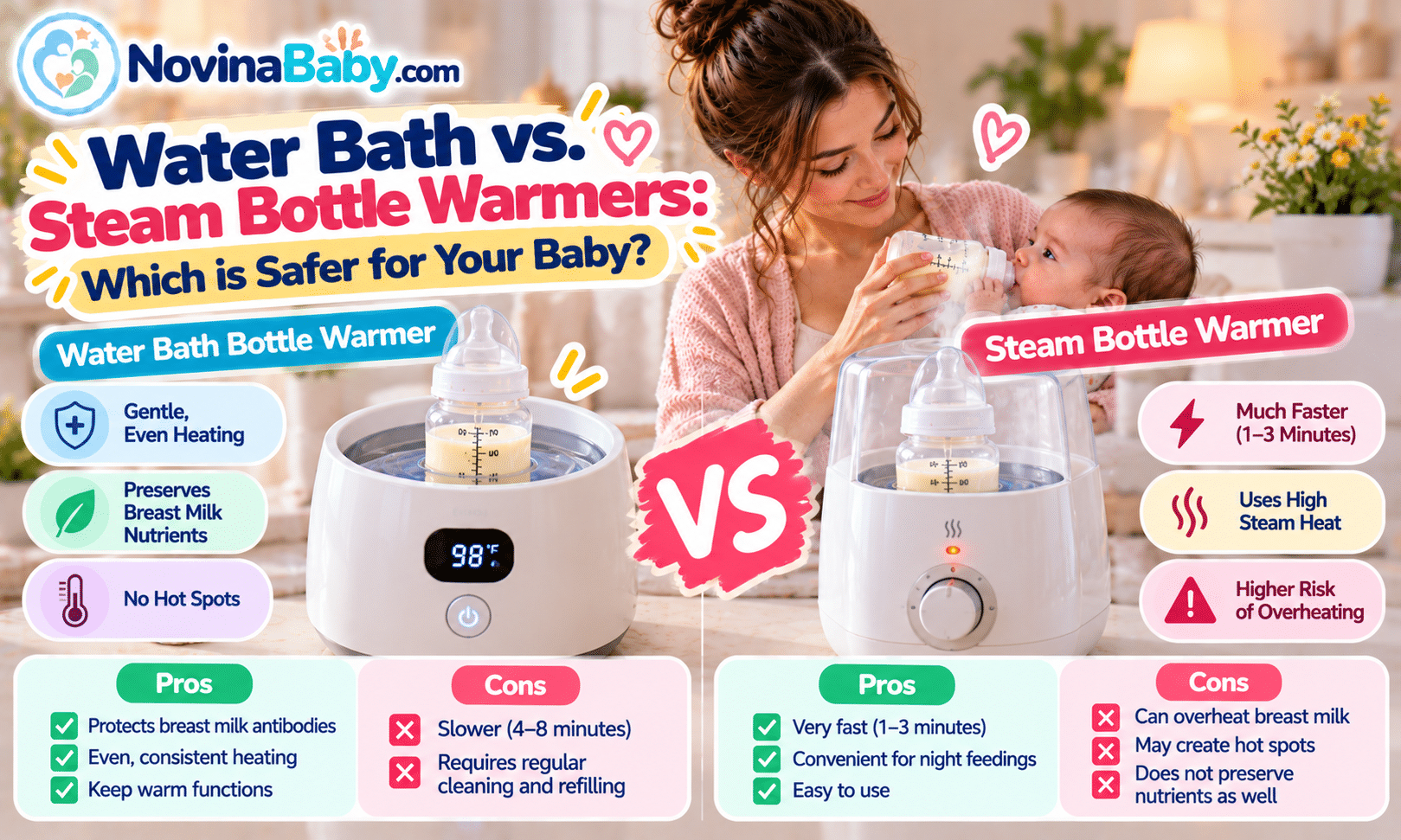
A water bath warmer operates much like a sous-vide machine in a professional kitchen. You fill the reservoir with water, and the device gently heats that water to a specific, controlled temperature. The baby bottle sits submerged in this warm water, and the heat slowly transfers through the bottle’s material to warm the milk inside.
Why It Excels for Breast Milk
Breast milk is a complex, living fluid. As we discussed in our guide on how to safely warm breast milk, high heat denatures essential proteins and destroys delicate antibodies. Water bath warmers are specifically designed to heat slowly and cap the maximum temperature, ensuring the milk never gets hot enough to degrade.
The Pros of Water Bath Warmers 👍
|
The Cons of Water Bath Warmers 👎
|
The Steam Bottle Warmer: Rapid Results
A steam warmer is built for speed. Instead of submerging the bottle, you add a very small, precise amount of water to the base of the unit. The warmer rapidly boils this water, creating hot steam that rises and envelops the bottle. The intense heat of the steam penetrates the bottle much faster than warm water.
Ideal for Formula Feeders
If you are feeding your baby formula, nutrient degradation from heat is less of a concern compared to breast milk. Steam warmers are incredibly popular among formula-feeding parents because they can take a bottle from room temperature to warm in as little as 90 seconds to 2 minutes.
The Pros of Steam Warmers 👍
|
The Cons of Steam Warmers 👎
|
⚠️ A Note on Thawing Frozen Milk
If you rely heavily on a frozen breast milk stash, a water bath warmer is almost mandatory. Exposing a frozen plastic breast milk storage bag to sudden, intense steam heat can cause the plastic to crack, split, or melt, completely ruining the milk inside.
Water bath warmers gently bring the temperature up, allowing the frozen milk to thaw safely and evenly without damaging the storage bag.
Water Bath vs. Steam Bottle Warmers (FAQ)
Which is better for breast milk: water bath or steam?
A water bath warmer is definitively better for breast milk. The gentle, controlled heat protects the delicate antibodies and proteins that can be destroyed by the aggressive heat of a steam warmer.
Can I use a steam warmer for breast milk if I am careful?
While you can, it requires extreme vigilance. You must remove the bottle the exact second the cycle ends to prevent overheating. For sleep-deprived parents at 3 AM, relying on a water bath with an auto-shutoff feature is a much safer, less stressful choice.
Do glass bottles heat differently than plastic in a warmer?
Yes. Glass conducts heat much faster than plastic or silicone. A glass bottle will warm up quicker in both water bath and steam warmers. Always follow the manufacturer’s specific time charts for different bottle materials to avoid overheating.
Ready to Find the Perfect Warmer?
Now that you understand the critical differences between water bath and steam heating, you can confidently choose the right technology for your feeding style. We have rigorously tested the market to identify the absolute best warmers in both categories, evaluating speed, safety, and late-night usability.