
💡 Technical Lighting Guide
📅 Updated for 2026
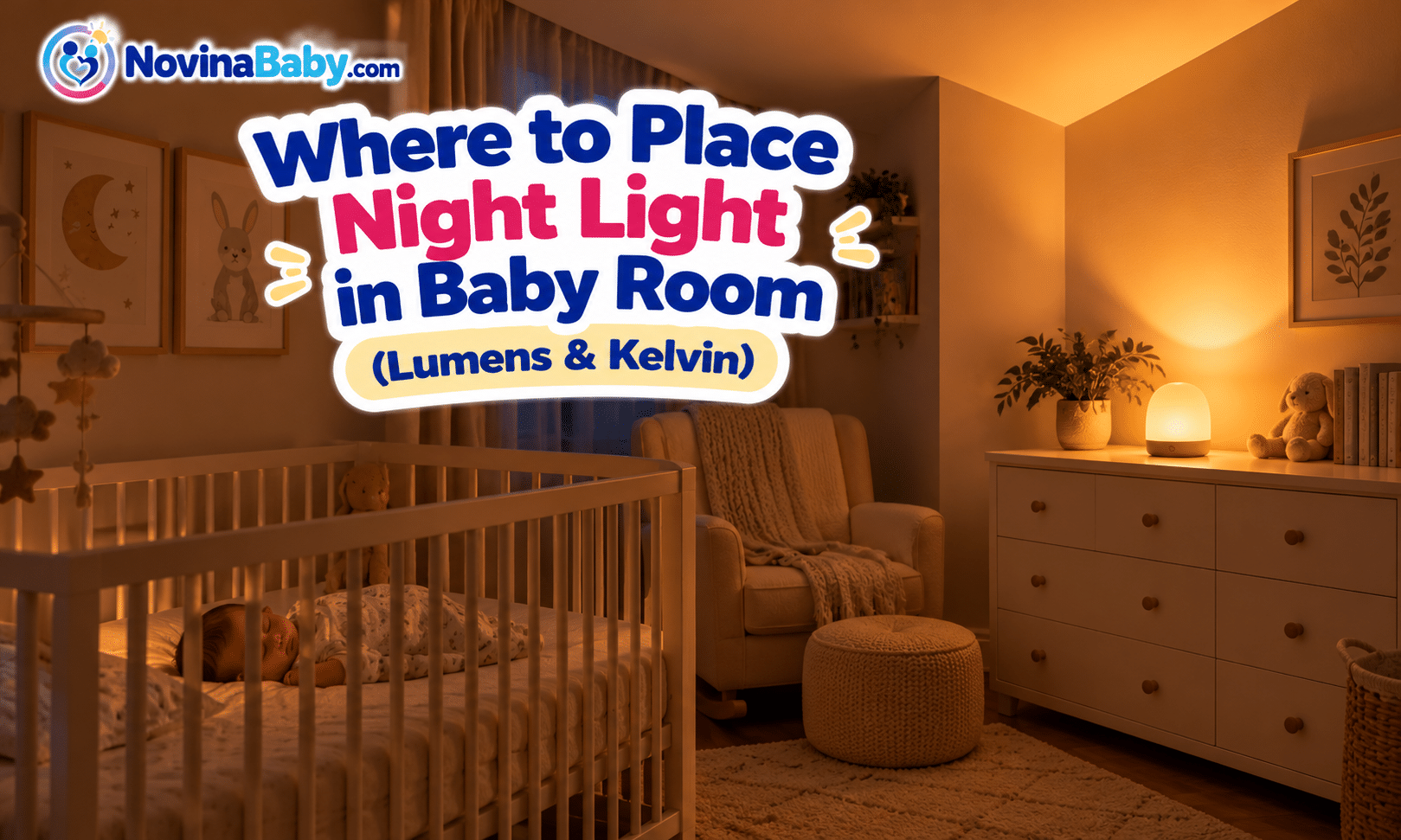
Where to Place Night Light in Baby Room – You have spent weeks designing the perfect nursery. The crib is assembled, the blackout curtains are hung, and you just unboxed a beautiful, highly-rated smart night light for your baby’s room. Naturally, you place it on the small table right next to the crib so you can easily see your baby’s face at night.
Unfortunately, placing a night light directly next to the crib is one of the most common—and disruptive—mistakes new parents make.
When you are trying to figure out where to place a night light in the baby’s room, spatial geometry and lighting physics matter just as much as the brand of the lamp. If the light source is too high, it acts like a spotlight shining directly into your baby’s upward-facing eyes. If it is too close to the crib, it poses a deadly cord strangulation hazard.
To create a safe, sleep-inducing sanctuary, you must master the “Bounce Light” technique, map out your nursery task zones, and decipher the confusing technical numbers on the back of lightbulb boxes. Here is your ultimate guide to nursery placement, Lumens, and Kelvin color temperatures.
Decoding Lighting Specs: Lumens vs. Kelvin
Before you decide where to put the light, you must ensure the light itself isn’t going to chemically wake your baby up. When evaluating night lights, ignore vague marketing terms like “warm glow” and look at the hard technical specifications: Lumens and Kelvin.
🌡️ Kelvin (K): The Color Temperature (Melatonin Protection)
Kelvin measures the color hue of the light. Higher numbers look blue/white (daylight), while lower numbers look orange/red (firelight).
- 5000K – 6500K (Cool White/Blue): The worst possible color for sleep. It halts melatonin production instantly.
- 2700K – 3000K (Standard “Warm White”): Still too bright and blue for overnight nursery use.
- 1000K – 2000K (Amber to Deep Red): The ultimate sleep zone. As we detail in our guide to red light vs blue light for baby sleep, 1800K amber or pure red light is invisible to the brain’s circadian clock and preserves 100% of your baby’s sleep hormones.
💡 Lumens: The Brightness Intensity
Lumens measure how much visible light is actually emitted. (Watts just measure energy consumption). For context, a standard living room lamp emits about 800 lumens.
- Overnight Continuous Glow: Should be 1 to 5 lumens. It should be barely visible, just enough to prevent you from tripping over the dog.
- 3 AM Diaper Changes & Feeding: Should be 10 to 30 lumens. This provides enough visibility to latch your baby or clean up a mess without triggering the baby’s visual orienting reflex. Always buy a night light with stepless dimming so you can control the exact lumen output.
The CPSC 3-Foot Rule: The Non-Negotiable Safety Perimeter
Before mapping out your nursery zones, you must establish the hazard perimeter. In our breakdown of dangerous nursery night light safety mistakes, cord strangulation ranks as the most lethal preventable risk.
The U.S. Consumer Product Safety Commission (CPSC) strictly enforces the 3-Foot (36-inch) Rule: No electrical cord from a night light, smart sound machine, or video baby monitor may be located within 3 feet of the crib edge.
Even if your 3-month-old cannot reach through the slats today, they will suddenly learn to grab and pull within a few weeks. If a smart lamp is perched on a shelf 12 inches above the crib, an infant pulling the cord will pull the heavy plastic hub directly down onto their face. Always use a tape measure during setup, and use rigid plastic wall cord-concealers to pin any excess slack firmly to the baseboards.
Where to Place a Night Light: Mapping the 3 Nursery Zones
A well-designed nursery usually requires two different lighting solutions: one for ambient room-wide glow (like a smart hub), and one for targeted task lighting (like a cordless tap light). Here is how to position them across the three main nursery zones.
Zone 1: The Crib & Bassinet (The “Bounce Light” Strategy)
Goal: Keep light entirely out of the baby’s direct line of sight.
Because babies sleep flat on their backs, they stare directly up at the ceiling and the upper halves of the walls. If you place a glowing night light on a tall 4-foot dresser next to the crib, it beams straight into their eyes.
The Pro Placement: Place the ambient night light (like a Hatch Rest) on the floor, on a low baseboard shelf, or hidden behind a solid piece of furniture like a gliding chair. This creates “Bounce Light” (indirect lighting). The light hits the wall or floor and washes the room in a gentle, diffused glow with zero harsh glare reaching the mattress. We discuss how this prevents startle reflexes in our guide to whether newborns actually need a night light.
Zone 2: The Glider & Feeding Station
Goal: Illuminate your lap and the baby’s mouth without lighting up the whole room.
When you bring your baby to the rocking chair to nurse or offer a bottle from one of your fast nighttime bottle warmers, you need localized light to check the latch and watch their breathing.
The Pro Placement: Use a cordless silicone tap light (like a JolyWell or VAVA) placed on a small side table behind or beside the armrest of the glider. This ensures your body casts a soft shadow over the baby’s face, protecting their eyes while giving you enough ambient reflection to see what you are doing.
Zone 3: The Changing Table
Goal: Surgical precision for diaper blowouts.
Cleaning up a messy stool diaper at 3:00 AM requires the brightest light in your nighttime routine (around 30 lumens), but you still want to avoid waking the baby fully.
The Pro Placement: Place a portable tap light directly on the changing dresser, positioned near the baby’s feet or behind the wipes dispenser. By keeping the light source at the foot of the changing pad, the illumination is directed at the diaper zone while the baby’s head remains in the darker shadows. This precise choreography is a core part of our 3 AM diaper change and feeding protocol.
What About Baseboard Motion Sensor Lights?
If your baby sleeps in a bedside bassinet in your master bedroom, you will eventually have to walk down the hallway to the kitchen for milk or to the nursery for fresh clothes. Turning on the hallway ceiling lights will ruin your rhodopsin (night vision) and wake you up fully.
Plug-in motion sensor night lights are fantastic for hallways, but they must be positioned carefully. A motion sensor light should never be placed inside the nursery or master bedroom where the baby sleeps. If a parent tosses and turns in bed, or a large pet walks past the crib, the motion sensor will trigger a sudden flash of light, startling the baby awake.
Place motion sensor lights in the hallway, positioned low on baseboard outlets, and ensure they are angled downward so the light pools on the floorboards rather than shining up into your eyes as you walk.
Frequently Asked Questions (FAQ)
Will a night light interfere with my baby monitor’s night vision?
Yes, if placed incorrectly. Video baby monitors use infrared (IR) sensors to see in the dark. If a night light is placed too close to the camera lens or shines directly into it, the camera’s light sensor will think it is daytime, switch off the IR night vision, and deliver a completely black, grainy picture to your parent unit. Always place the night light out of the camera’s direct line of sight.
Can I place a night light under the crib for a cool glowing effect?
No. While “under-crib glow” looks great on Pinterest, placing any electrical device directly under the crib violates the CPSC cord perimeter rules. Furthermore, as your baby grows and the crib mattress is lowered, an under-crib light poses a heat risk or a grabbing hazard. Keep all lights outside the crib footprint.
Is it safe to use a Himalayan salt lamp on the nursery dresser?
Pediatricians generally advise against salt lamps in nurseries. They are exceptionally heavy (a severe crush hazard if a toddler pulls the cord), they use hot incandescent bulbs rather than cool LEDs, and they absorb humidity from the air, causing them to “sweat” salty water which can drip into the electrical socket.
How bright is “too bright” for a nursery night light?
A good rule of thumb: If you can comfortably read a standard paperback book by the light of the night lamp from across the room, it is too bright for sleeping. The ambient sleep glow should be just bright enough to see the outline of the furniture, usually around 1 to 5 lumens.
Find the Perfect Dimming Night Light for Your Nursery Layout
Mastering the “bounce light” technique is effortless when you have a night light capable of dropping down to a 1% amber glow. We have evaluated the top cordless tap lights and smart nursery hubs for their minimum lumen output, color spectrum, and safety features.
Read Our Ultimate Guide on the Best Baby Night Lights of 2026