
👩👧 Mom Approved
📅 Updated for 2026
Do You Really Need a Bottle Warmer? (Pros, Cons & Alternatives) – Building a baby registry can quickly transition from an exciting milestone to a deeply overwhelming chore. As you scroll through endless lists of “must-have” baby gear, you will inevitably stumble across a highly debated appliance: the baby bottle warmer.
If you ask five different mothers, “Do you need a bottle warmer?”, you will likely get five completely different answers. One mom will swear it saved her sanity during 3:00 AM feedings, while another will proudly declare it a complete waste of kitchen counter space.
The truth is, a bottle warmer is not a strict biological necessity for infant survival. However, it is an incredibly powerful tool designed to protect your baby’s safety, preserve the delicate nutrients in your breast milk, and optimize your sleep schedule.
Before you confidently add this appliance to your cart or delete it from your registry forever, let’s look at the pediatric science behind warm milk, the undeniable pros and cons, and the safety of the alternatives.
The Science: Do Babies Actually Need Warm Milk?
Let’s address the most common misconception first: No, babies do not biologically require warm milk to survive or digest properly.
There is a persistent old wives’ tale that feeding a baby cold milk straight from the refrigerator will cause painful stomach cramps or colic. Pediatricians and modern medical studies have thoroughly debunked this myth. Cold milk is 100% physically safe for an infant’s digestive tract.
However, “safe” does not always mean “preferred.”
Breast milk comes out of the human body at a perfectly cozy 98.6°F (37°C). If you are transitioning a breastfed baby to a bottle, handing them a chilly, 40°F plastic bottle can be a massive shock to their system. Many babies will simply refuse to drink it, leading to frustrating meal times and wasted milk.
Warm milk is familiar, comforting, and has a mild soporific (sleep-inducing) effect, which is exactly what exhausted parents want during middle-of-the-night feeds.
The Pros: Why Most Parents Swear by Them
While not strictly necessary for survival, bottle warmers offer significant quality-of-life improvements. Here is why the majority of modern parents consider them a registry essential.
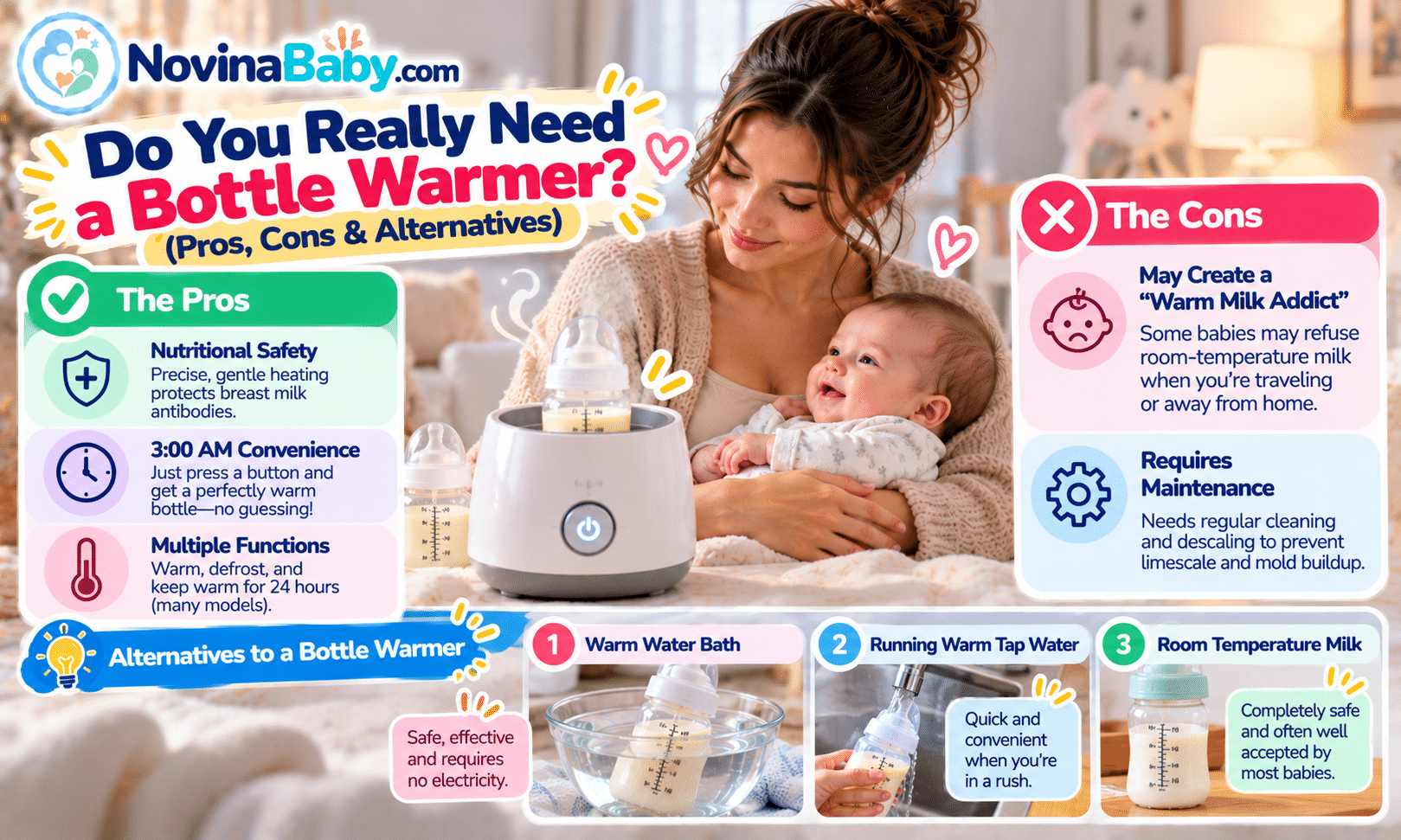
1. Nutritional Safety for Breast Milk
Breast milk is a living fluid filled with delicate antibodies. Heating it too aggressively will destroy these immunological benefits. A smart bottle warmer guarantees precise, gentle heating that never crosses the dangerous temperature threshold. For a deeper dive, read our guide on how to safely warm breast milk.
2. The 3:00 AM Convenience
When you are operating on two hours of sleep, you do not want to stand at a sink guessing if a bowl of water is hot enough. A warmer allows you to press a single button, soothe your crying baby, and hear a beep when the bottle is perfectly ready.
3. Specialized Heating Modes
Modern warmers are multi-functional. They can safely defrost frozen breast milk bags without melting the plastic, and many feature a 24-hour “keep warm” mode that holds water at exactly body temperature for instant formula mixing.
The Cons: Why Some Parents Skip Them
To give you a completely unbiased view, here are the legitimate reasons some families choose to skip the bottle warmer entirely.
1. Creating a “Warm Milk Addict”
If you religiously serve your baby perfectly heated 98.6°F milk every single time, they will come to expect it. This can become highly problematic when you are traveling, at a restaurant, or running errands without access to a plug, and the baby outright refuses a room-temperature bottle.
2. Maintenance and Cleaning
Bottle warmers that use water baths require regular maintenance. If you have hard tap water, limescale will build up quickly. You must commit to reading how to clean and descale a bottle warmer to prevent nasty mold growth inside the heating chamber.
🚫 Unsafe Alternatives You MUST Avoid
If you decide against buying a bottle warmer, you must still adhere to safe heating practices. Never take shortcuts with these two dangerous methods:
- The Microwave: As mentioned, the AAP strictly forbids microwaving infant milk. Microwaves heat liquid unevenly, creating localized pockets of boiling milk that will severely burn your baby’s esophagus, even if the plastic bottle feels cool outside.
- Boiling Water on the Stove: Never place a baby bottle directly into a pot of actively boiling water on a hot stove. The intense heat will degrade the plastic, potentially leaching microplastics into the milk, and will instantly destroy the nutritional value of breast milk.
Safe Alternatives to Buying a Warmer
If you have decided that you do not want to sacrifice the kitchen counter space, there are perfectly safe, manual ways to take the chill off your baby’s milk.
- The Warm Bowl Method: Fill a mixing bowl or a large mug with warm (not boiling) water from the tap. Submerge the sealed baby bottle in the water for 10 to 15 minutes. This requires planning ahead, as it is much slower than an electric warmer, but it is 100% safe.
- Running Tap Water: Hold the bottle under a stream of warm running tap water, rotating it slowly for several minutes. While effective, this method wastes a significant amount of water if done multiple times a day.
Final Verdict: Is It Worth the Money?
So, do you need a bottle warmer? The answer depends entirely on your specific feeding journey.
You ABSOLUTELY need one if: You are an “Exclusively Pumping” (EP) mother, or if you are returning to work and rely heavily on a caregiver feeding your baby refrigerated or frozen breast milk. A dedicated water-bath warmer is the only way to guarantee your precious milk is heated without destroying its vital antibodies.
You HIGHLY BENEFIT from one if: You are exclusively formula-feeding. A modern warmer with a “24-Hour Keep Warm” feature allows you to keep water at exactly 98.6°F all day and night. When the baby cries, you pour the formula powder in, shake, and serve instantly.
You CAN SKIP IT if: You are directly nursing 90% of the time and only occasionally give a bottle. In this scenario, the manual “bowl of warm water” method is perfectly adequate for your infrequent needs.
Do You Need a Bottle Warmer (FAQ)
How do I transition my baby to drink cold milk?
Do it gradually. If your baby is used to 98.6°F milk, start warming it slightly less each day. Over the course of two weeks, slowly drop the temperature to room temperature, and eventually, try offering it slightly chilled. Never force it if the baby aggressively rejects the bottle.
Are travel bottle warmers worth buying?
If you take frequent road trips or fly often, yes. Battery-powered warmers or thermal hot water flasks (like the Tommee Tippee) are incredibly helpful when you don’t have access to a kitchen or a warm tap to heat a bottle manually.
Which is better: a steam warmer or a water bath warmer?
It depends on what you are heating. Steam warmers are much faster, making them ideal for formula. Water bath warmers are slower but gentler, making them the superior and safer choice for protecting the nutrients in breast milk. Read our full comparison on water bath vs steam warmers to learn more.
Ready to Add One to Your Registry?
If you have decided that a bottle warmer is the right investment for your sleep schedule and your baby’s safety, do not buy blindly. We have rigorously tested the market to identify the absolute best smart warmers, travel heaters, and budget-friendly options available today.