
⚠️ CPSC Hazard Guidelines
📅 Updated for 2026
When to Replace Baby Bottles and Nipples – When you are exhausted and washing the same baby bottles for the hundredth time, it is incredibly easy to go on autopilot.
You scrub the plastic, rinse the silicone nipple, throw it on the drying rack, and repeat the cycle the very next day.
But failing to actively inspect your feeding gear can expose your vulnerable infant to severe health risks.
From microscopic scratches harboring toxic mold to degrading silicone that can easily tear off in your baby’s throat, old bottles are a hidden danger.
Knowing exactly when to replace baby bottles and nipples is a non-negotiable safety skill for every new parent.
Bottle components do not last forever, especially if they are subjected to daily boiling, harsh scrubbing, and UV sterilizers.
Let’s walk through the ultimate 2026 safety checklist so you know exactly when it is time to throw that old gear in the trash.
The Silicone Nipple Safety Checklist
Silicone nipples are the most fragile part of the entire bottle system.
Because they spend hours inside your baby’s mouth and are constantly pulled and bitten, they degrade much faster than the bottle itself.
As a general rule, pediatricians recommend replacing silicone nipples every 2 to 3 months, regardless of how they look.
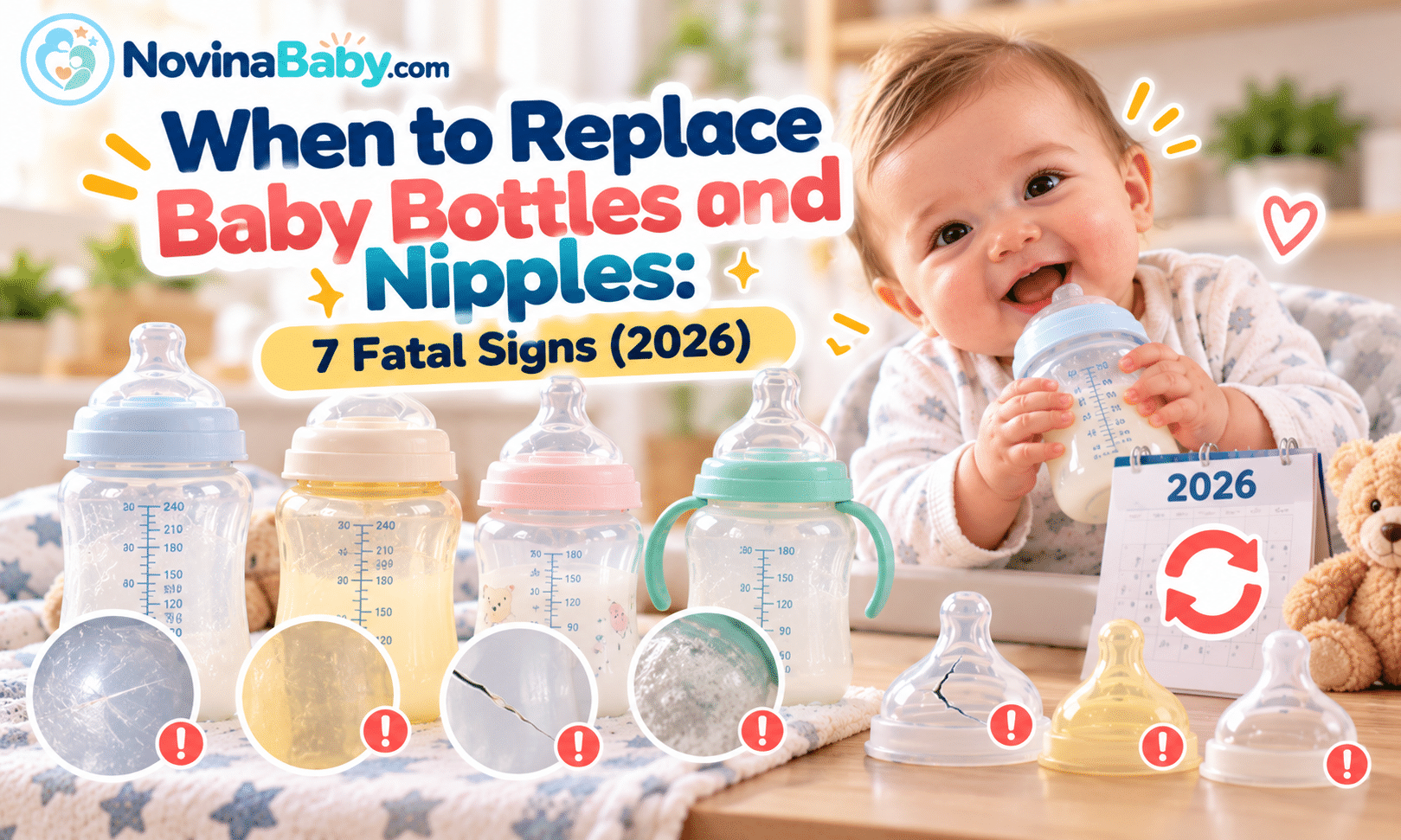
However, you must throw them away immediately if you notice any of these fatal signs:
When to Replace Plastic, Glass, and Silicone Bottles
Now that the nipples are sorted, how do you know when to replace baby bottles and nipples when evaluating the actual bottle body?
The lifespan of the bottle depends entirely on the material you chose to buy.
1. Plastic Baby Bottles (Replace Every 4 to 6 Months)
Plastic is highly susceptible to wear and tear.
You must replace plastic bottles immediately if you see internal scratches (caused by abrasive bottle brushes), because microscopic bacteria and mold will hide inside those grooves where soap cannot reach.
2. Silicone Baby Bottles (Replace Every 6 to 12 Months)
Medical-grade silicone bottles (like Comotomo) are much more durable than plastic.
However, they should be replaced if they retain a foul, sour milk odor that cannot be removed by boiling, or if the squishy body starts to feel sticky.
3. Glass Baby Bottles (Replace Only When Broken)
Glass is the holy grail of durability and chemical safety.
A high-quality glass bottle will last through multiple children and never needs to be replaced unless you spot a chip, crack, or deep scratch on the glass surface.
FAQ When to Replace Baby Bottles and Nipples
Can I recycle old baby bottles and silicone nipples?
Most curbside recycling programs do not accept silicone. You should throw silicone nipples in the regular trash. Hard plastic and glass bottles can usually be recycled, but always check your local municipality’s recycling rules regarding polypropylene (PP) plastics.
Do baby bottles actually expire?
There is no official “expiration date” printed on bottles. However, experts recommend discarding any plastic bottles that are older than 3 to 4 years, as older plastics may degrade or contain outdated chemical compositions that no longer meet modern FDA standards.
Why do my bottle nipples tear so quickly?
If your nipples are tearing after just a few weeks, your baby might be chewing on them. This is a common sign of teething, or a sign that the milk flow is too slow and the baby is biting down in frustration. Consider leveling up to a faster flow rate.
Is It Time for a Stash Upgrade?
If your current bottles are scratched, cloudy, or smelling sour, do not risk your baby’s health. It is officially time for a fresh start. We’ve rigorously evaluated the newest, safest medical-grade silicone and glass options on the market.