
💡 Eco-Friendly Cleaning Facts
📅 Updated for 2026
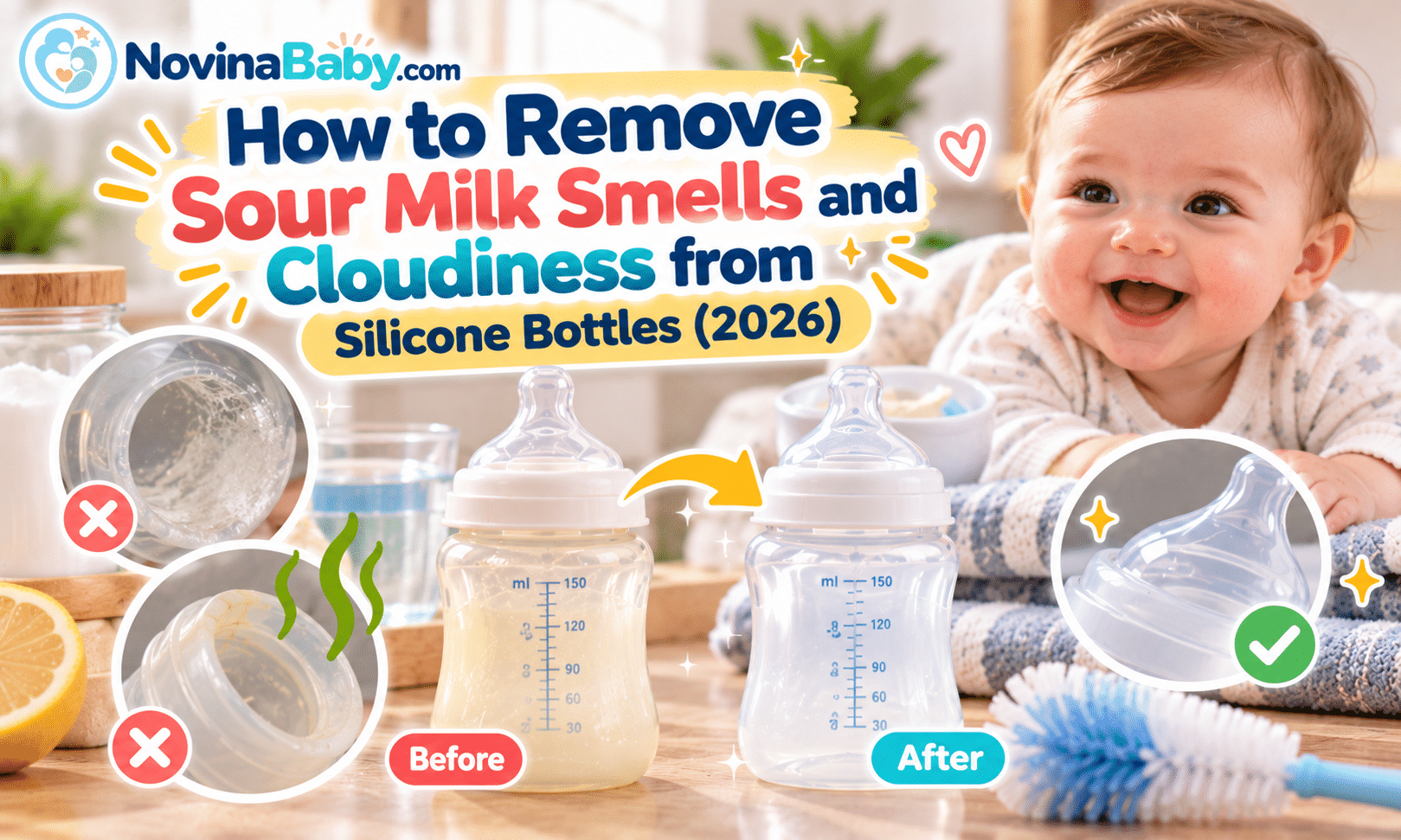
How to Remove Sour Milk Smells and Cloudiness from Silicone Bottles – You spent top dollar outfitting your nursery with the softest, most highly-rated medical-grade silicone baby bottles on the market.
But after just a month of heavy use, your beautiful, crystal-clear Comotomo or Boon Nursh bottles have turned a cloudy, murky yellow.
Even worse, no matter how many times you scrub them with hot, soapy water, they still emit a gag-inducing odor of sour milk mixed with floral dish soap.
Before you throw these expensive bottles in the trash, you need to understand the unique nature of silicone.
Silicone is incredibly safe and heat-resistant, but it is also highly porous, acting like a microscopic sponge that traps fats, hard water minerals, and artificial fragrances.
Learning exactly how to remove sour milk smells from silicone bottles is actually quite simple once you stop using traditional cleaning chemicals.
Let’s dive into the three proven, all-natural methods to strip away the odors and restore your silicone bottles to their original glory.
3 Proven Methods to Restore Stinky, Cloudy Silicone
To successfully remove sour milk smells from silicone bottles, you must break down the trapped milk fats without degrading the silicone itself.
Never use bleach or harsh chemical degreasers on baby items. Instead, rely on these three powerful, natural chemical reactions:
The #1 Mistake: Scented Dish Soaps
The most common complaint from parents using silicone bottles is that their baby’s milk tastes like a bouquet of lavender.
Standard grocery store dish soaps are packed with heavy artificial fragrances.
Because silicone is incredibly porous, it absorbs these fragrances during a 10-minute soak, effectively ruining the taste of the breast milk or formula you put in it later.
To prevent this, you must exclusively use unscented, plant-based, baby-specific dish soap for all silicone feeding gear.
Frequently Asked Questions (FAQ)
Are UV sterilizers bad for silicone bottles?
While UV sterilizers are highly effective at killing bacteria, prolonged exposure to UV-C light accelerates the aging process of silicone. It can cause premature yellowing, cloudiness, and a sticky texture over time.
Can I wash silicone baby bottles in the dishwasher?
Yes, most medical-grade silicone bottles are top-rack dishwasher safe. However, silicone will absorb the smell of the harsh dishwasher detergent and any pungent food residues (like spaghetti sauce) present in the wash cycle. Hand washing is strongly recommended to preserve neutrality.
How often should I deep clean my silicone bottles with vinegar?
You do not need to do this every day. A vinegar boil or baking soda treatment is a “deep clean” process that should only be done every 3 to 4 weeks, or whenever you notice a stubborn film or lingering odor.
Looking for High-Quality Silicone Bottles?
Now that you know how to remove sour milk smells from silicone bottles, you can confidently invest in this incredibly safe, shatter-proof material. We’ve rigorously evaluated the market for the best medical-grade silicone bottles, including full reviews of Comotomo, Boon Nursh, and Nanobebe.