
💡 Evidence-Based Nutrition
📅 Updated for 2026
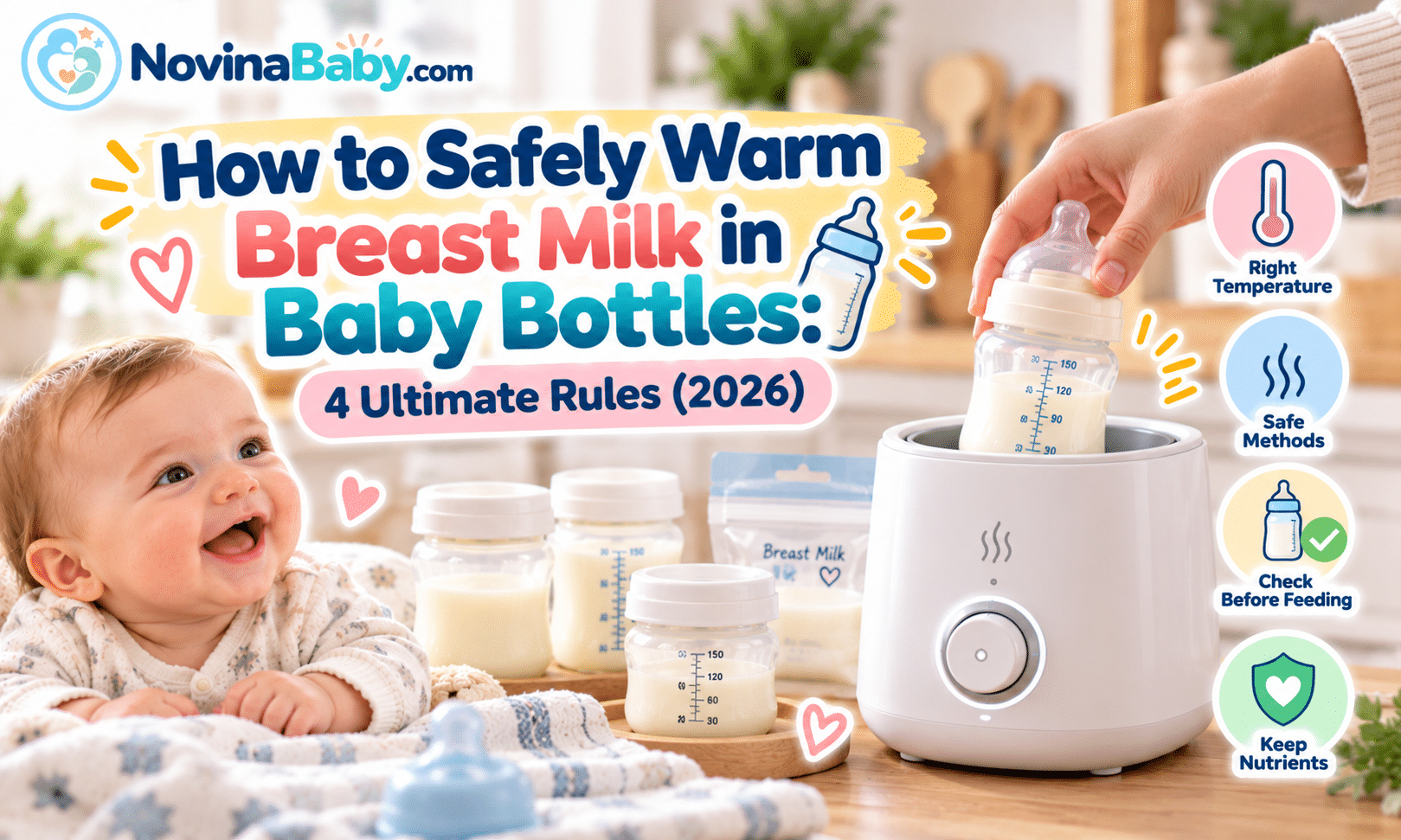
How to Safely Warm Breast Milk in Baby Bottles – It is 3:00 AM, your newborn is screaming frantically, and the only milk you have is sitting ice-cold in the back of the refrigerator.
In your sleep-deprived panic, the kitchen microwave looks like the fastest, most convenient solution to stop the crying.
However, throwing a bottle into the microwave is one of the most dangerous feeding mistakes a new parent can make.
Breast milk is a living fluid, packed with delicate antibodies, stem cells, and essential white blood cells that protect your fragile infant from disease.
If you heat that “liquid gold” incorrectly, you will instantly destroy its immunological properties and risk severely burning your baby’s throat.
Learning exactly how to safely warm breast milk in baby bottles is a critical skill that preserves nutrition and ensures your baby’s safety.
Let’s break down the hidden dangers of extreme heat and explore the four ultimate, pediatrician-approved methods for warming milk safely.
The Microwave Warning: Why You Must Avoid It
The CDC and the American Academy of Pediatrics (AAP) are completely aligned on this issue: never microwave baby bottles.
Microwaves do not heat liquids evenly.
Even if the outside of the plastic bottle feels completely cool to your touch, the milk inside can have hidden, boiling-hot pockets.
When the baby drinks, these hidden hot spots can cause severe, immediate third-degree burns to their mouth, tongue, and esophagus.
Furthermore, microwaves obliterate the nutritional profile of breast milk. The extreme, localized heat rapidly destroys the anti-infective properties and vitamin C that your baby desperately needs.
3 Proven Methods to Safely Warm Breast Milk
To preserve the antibodies and prevent burns, breast milk should only be warmed to body temperature (around 98.6°F or 37°C).
Here are the safest, most effective ways to gently safely warm breast milk in baby bottles:
The Final Safety Check: The Wrist Test
Before you ever place the nipple into your baby’s mouth, you must physically test the temperature.
Never rely entirely on the timer of an electric warmer, as different bottle materials (glass vs. silicone) transfer heat at vastly different speeds.
Swirl the bottle gently to mix the separated fat back into the liquid (never shake it vigorously, as this damages the proteins).
Then, squeeze one or two drops of milk onto the inside of your wrist.
The skin on your inner wrist is highly sensitive. The milk should feel completely neutral—neither hot nor cold. If it stings or feels hot to you, it is dangerously hot for your baby.
FAQ Safely Warm Breast Milk in Baby Bottles
Do I actually have to warm breast milk?
No! There is no medical requirement to warm breast milk. Many babies are perfectly happy drinking milk cold directly from the fridge or at room temperature. Warming is entirely for the baby’s comfort and preference.
Can I put warmed breast milk back in the fridge if my baby falls asleep?
Once breast milk has been warmed and your baby has fed from the bottle, bacteria from their mouth enters the milk. The CDC states you must discard any remaining milk after 2 hours. You cannot safely put it back in the fridge to reuse later.
How long does it take for breast milk to warm up?
Using the warm water bowl method typically takes 5 to 10 minutes depending on the volume of milk. High-quality electric bottle warmers can safely heat a 4 oz bottle from the fridge in about 3 to 4 minutes.
Ready to Feed Your Baby Safely?
Now that you know exactly how to safely warm breast milk in baby bottles, you need a bottle material that transfers heat quickly and safely. We’ve rigorously evaluated the market for the best glass and medical-grade silicone bottles that won’t leach chemicals when heated.