
💡 Evidence-Based Feeding Facts
📅 Updated for 2026
How to Introduce a Bottle to a Breastfed Baby – Your maternity leave is slowly coming to an end, and panic is starting to set in.
You have pumped ounces of precious liquid gold and purchased the most expensive, highly-rated baby bottles on the market.
But the moment the silicone nipple touches your baby’s lips, they arch their back, turn their head away, and scream as if they have been betrayed.
A breastfed baby refusing the bottle is one of the most common and stressful hurdles new parents face. Babies are smart; they know that the plastic bottle does not smell, feel, or taste like their mother.
However, learning exactly how to introduce a bottle to a breastfed baby is entirely possible with the right timing and a lot of patience.
Let’s dive into the seven proven, lactation-approved strategies to help your baby accept a bottle without causing nipple confusion or damaging your nursing relationship.
Timing is Everything: The 4-Week Sweet Spot
Before you even attempt to offer a bottle, you must consider your baby’s age.
If you introduce a bottle on day two, the baby might realize that a bottle flows much faster and easier than a breast, leading to a complete refusal to nurse (often mislabeled as nipple confusion).
If you wait until they are 12 weeks old, they may become so stubborn and attached to the breast that they will categorically reject any artificial nipple.
Lactation consultants agree that the perfect window for how to introduce a bottle to a breastfed baby is between 3 and 4 weeks of age.
By week four, breastfeeding is usually well established, but the baby is still young enough to adapt to new feeding methods.
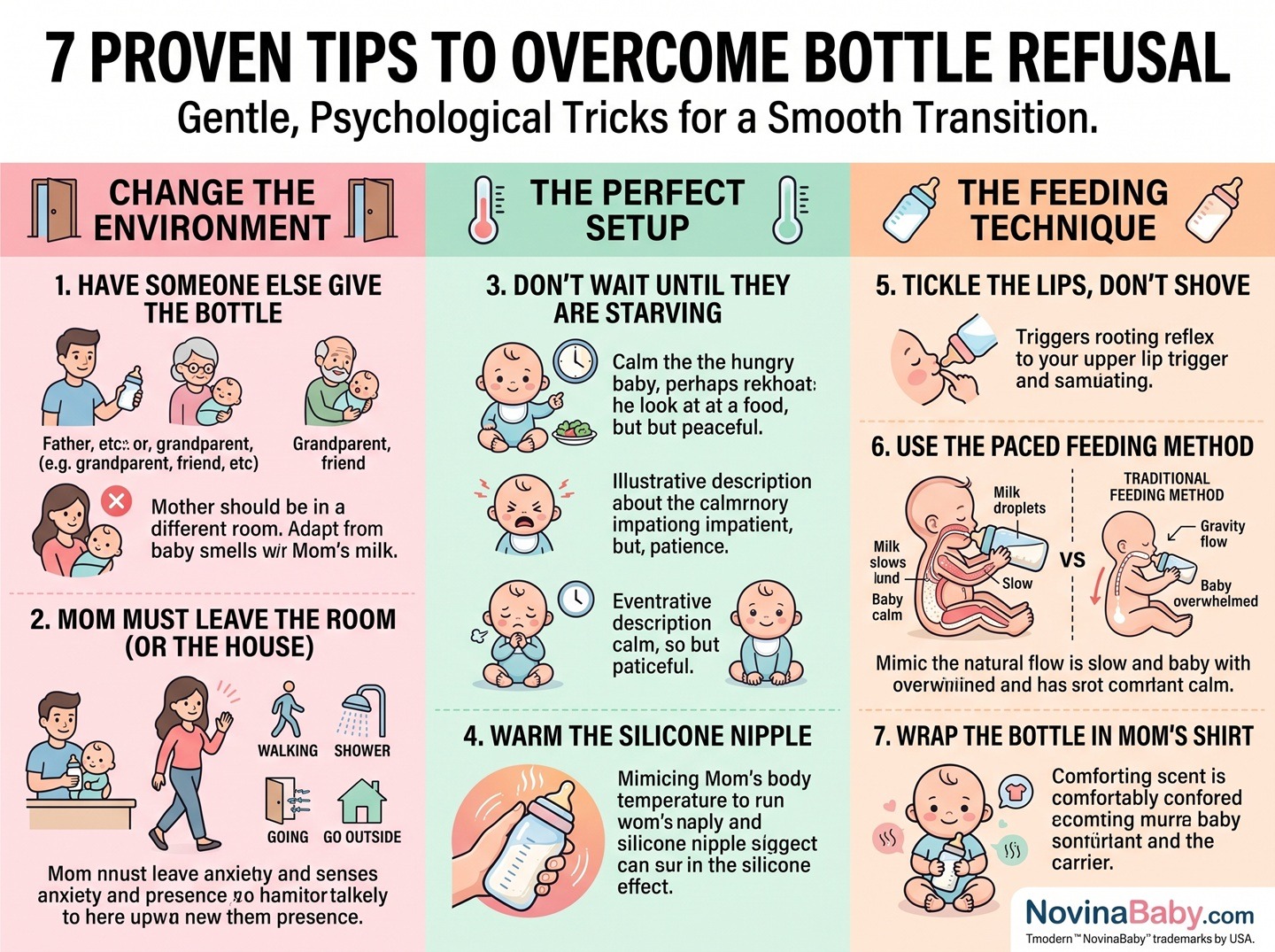
7 Proven Tips to Overcome Bottle Refusal
If your baby is actively fighting the bottle, do not force it. Forcing a rigid plastic nipple into a screaming baby’s mouth will only create a traumatic association.
Instead, use these seven gentle, psychological tricks to ease the transition:
What if the Baby Still Refuses?
If you have tried all seven steps and your baby is still batting the bottle away, the problem might be the bottle itself.
Breastfed babies require specific bottle features to succeed.
They need an ultra-wide neck base that forces them to open their mouths wide, and they absolutely require a Size 0 or Size 1 (Slow Flow) nipple so they don’t drown in the milk.
If your baby hates a narrow bottle, try switching to a soft, squeezable silicone bottle (like Comotomo or Nanobebe) that feels much more like natural skin.
Frequently Asked Questions (FAQ)
Is nipple confusion actually real?
Lactation consultants prefer the term “flow preference.” Babies are rarely confused about where the milk is coming from. Instead, if a bottle flows much faster and requires less effort than the breast, the baby will naturally prefer the easier option.
Should I use fresh breast milk or frozen milk for the first bottle?
Always use freshly pumped breast milk for the first few bottle attempts. Thawed frozen milk can sometimes develop a soapy taste due to high lipase, which might give the baby another reason to reject the bottle.
How often should I offer the bottle to keep them used to it?
Once your baby accepts the bottle, you should offer it at least 2 to 3 times a week. If you stop giving bottles for a month, they might “forget” the skill and refuse it again when you return to work.
Ready to Find the Perfect Nursing Bottle?
Now that you know exactly how to introduce a bottle to a breastfed baby, your next step is choosing a vessel that mimics the breast perfectly. We’ve rigorously evaluated the market for the softest silicone materials, widest latch angles, and most restrictive slow-flow nipples.