

🍼 Evidence-Based Feeding Facts
📅 Updated for 2026
What is Paced Bottle Feeding? – Does your newborn constantly gasp, choke, or gulp frantically during mealtime?
Many new parents accidentally tilt the bottle straight up, allowing gravity to force milk down the baby’s throat at an overwhelming speed.
This traditional feeding method often leads to severe colic, excessive spit-up, and extreme fussiness.
The solution is a highly recommended technique known as paced bottle feeding.
By mimicking the natural, slower flow of breastfeeding, paced bottle feeding puts your baby entirely in control of how fast they consume their milk.
Whether you are exclusively pumping, using formula, or combining breast and bottle, mastering this technique is crucial for your baby’s digestive health.
Let’s break down exactly what this method is, its incredible benefits, and a step-by-step guide on how to perform it safely.
What is Paced Bottle Feeding? The Core Concept
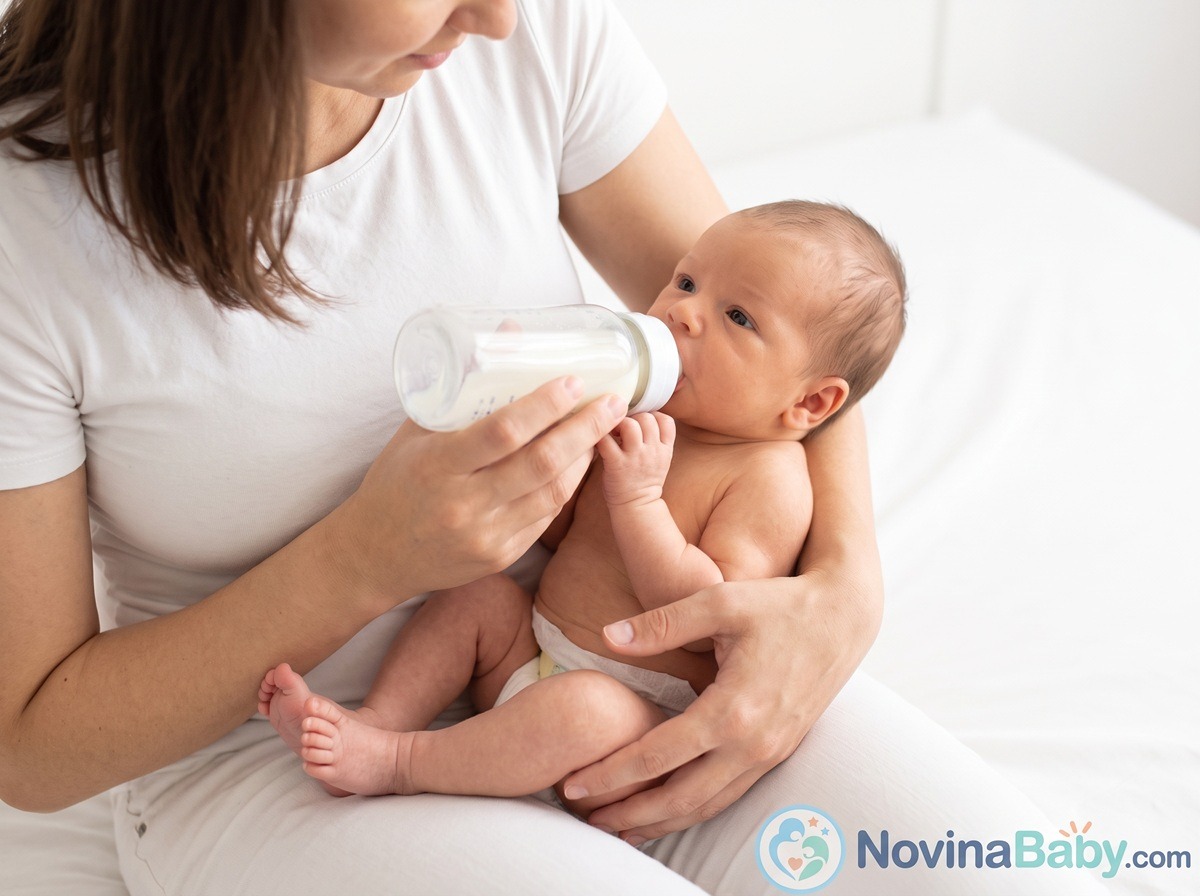
At its core, paced bottle feeding is a method of feeding that slows down the flow of milk.
Instead of laying the baby flat on their back and letting gravity do the work, you hold the baby in a seated, upright position.
The bottle is held horizontally (parallel to the floor) so that the milk rests just at the tip of the nipple.
This forces the baby to actively suck to draw the milk out, requiring the exact same jaw muscles they would use while nursing at the breast.
Pros & Cons of the Paced Feeding Method
Before you completely change your daily routine, it is important to understand the medical benefits and the minor challenges of this technique.
5 Simple Steps for Proper Paced Bottle Feeding
Implementing this technique might feel slightly awkward at first, but your baby will quickly adapt.
Follow these five proven steps to master paced bottle feeding at home:
1. Use a Slow Flow Nipple
You cannot effectively pace a feed if the milk is pouring out aggressively.
Always equip your bottle with a Size 0 (Preemie) or Size 1 (Slow Flow) nipple, regardless of your baby’s actual age.
2. Sit the Baby Upright
Never feed your baby while they are lying flat on their back.
Support their head and neck with your hand, and position them so they are sitting in an upright, 45-to-90-degree angle on your lap.
3. Tickle the Lips to Invite the Latch
Do not force the bottle into your baby’s mouth.
Gently tickle their upper lip with the nipple until they root (open their mouth wide), then allow them to pull the nipple in themselves.
4. Hold the Bottle Horizontally
Keep the bottle completely parallel to the floor.
The milk should only fill the tip of the nipple, ensuring gravity does not push the liquid down their throat.
5. Take Frequent Breaks
Every 30 to 60 seconds (or when you notice the baby gulping fast), gently tilt the bottle down to empty milk from the nipple.
Allow the baby to catch their breath, burp them if necessary, and then resume the feed.
Frequently Asked Questions (FAQ)
How long should paced bottle feeding take?
A proper paced feeding session should take approximately 15 to 20 minutes. This mirrors the average time a baby spends actively nursing at the breast.
When should I stop paced bottle feeding?
You can continue this method as long as your baby takes a bottle. However, once your baby is sitting up independently (around 6 months) and starting solid foods, they can usually manage a faster flow without choking.
Can I use angled bottles for paced feeding?
No. Angled bottles are specifically designed to keep the nipple completely full of milk by utilizing gravity. To properly control the flow, you must use a standard, straight baby bottle.
Ready to Support Your Baby’s Digestion?
Now that you know exactly how to execute paced bottle feeding, you need a bottle with a truly slow, restrictive nipple to make it work. We’ve rigorously evaluated the market for the best breast-like nipples and advanced anti-colic venting systems.