
💡 Evidence-Based Planning
📅 Updated for 2026
How Many Baby Bottles Do You Need? – Walking through the baby aisle and staring at massive, expensive feeding sets can instantly induce panic.
As a new parent, the most common question you will ask yourself is: exactly how many baby bottles do you need to survive the newborn phase?
Buy too few, and you will find yourself weeping at the kitchen sink at 3:00 AM, desperately washing a single bottle while your baby screams.
Buy too many, and you will waste hundreds of dollars on a brand that your baby might completely reject on day one.
The perfect number depends entirely on your specific feeding strategy, your daily washing tolerance, and your baby’s unique latch preferences.
Let’s break down exactly how many baby bottles do you need whether you are formula feeding, exclusively pumping, or nursing, so you can build the ultimate, stress-free stash.
The Golden Rule: Start with a “Bottle Box”
The biggest mistake first-time parents make is adding an expensive 10-piece set of a single bottle brand to their baby registry.
Babies are notoriously picky, and a bottle that works miracles for your best friend’s baby might cause severe colic for yours.
Instead of committing to one brand, lactation consultants recommend creating a “Bottle Box.”
Buy just one bottle from 3 or 4 different top-rated brands (for example: one Dr. Brown’s, one Comotomo, and one Philips Avent).
Test them during the first week to see which nipple shape your baby accepts and which venting system effectively prevents gas.
The Pros of Testing Multiple Brands
- Prevents Wasted Money: You won’t be stuck with a $60 set of bottles your baby refuses to drink from.
- Finds the Perfect Latch: Allows you to quickly identify if your baby needs a wide, breast-like nipple or a narrow one.
- Solves Colic Faster: Lets you immediately switch to an anti-colic vented bottle if your baby develops severe gas.
The Cons of Testing Multiple Brands
- Mismatched Parts: You will temporarily have to deal with different collars, nipples, and lids floating around your kitchen.
- Immediate Reordering: Once you find the “winner,” you must quickly order a full set on Amazon before you run out of clean bottles.
How Many Baby Bottles Do You Need for Formula Feeding?
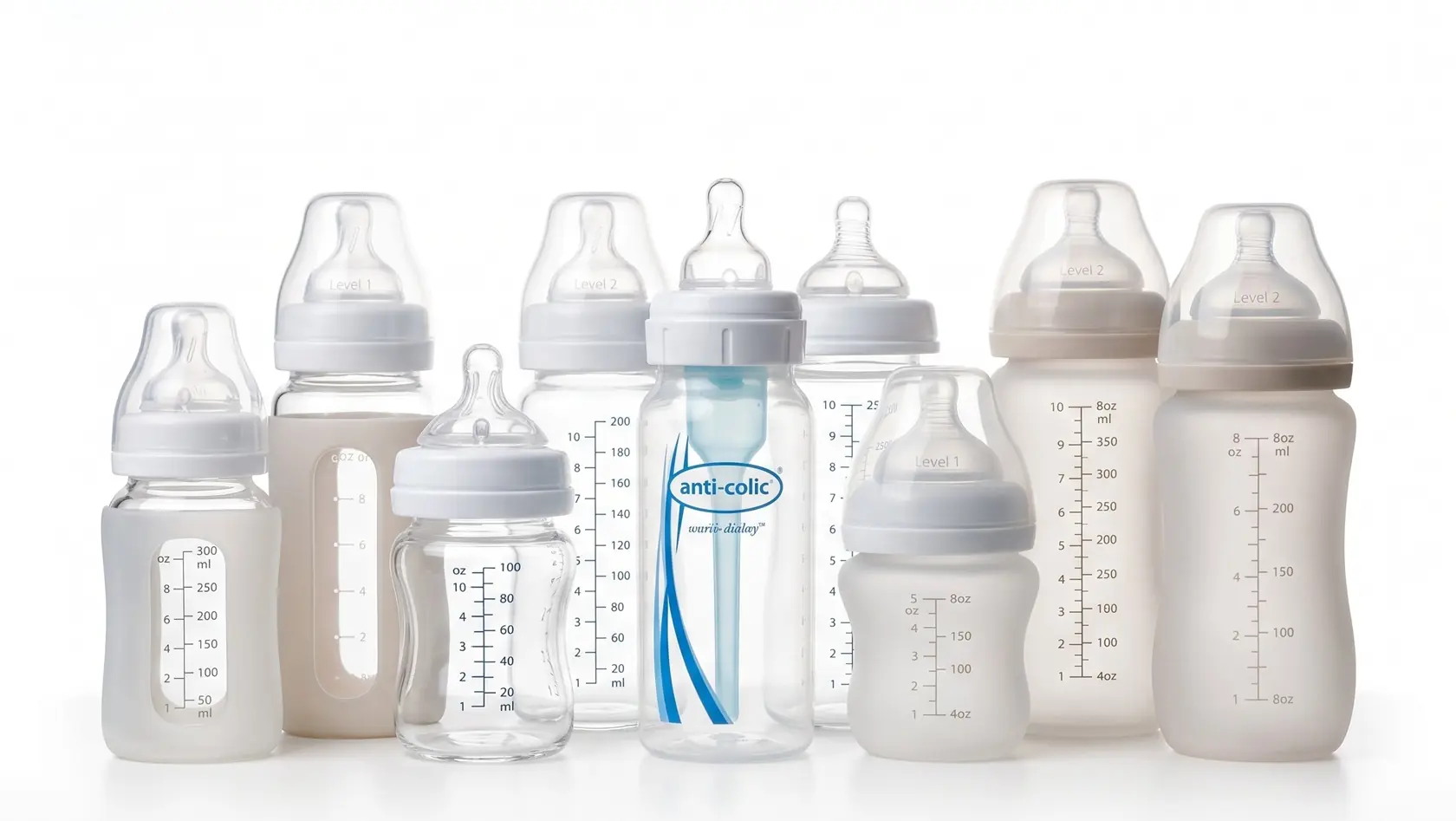
If you are exclusively feeding your baby formula, the bottle is their only source of food.
Newborns generally eat every 2 to 3 hours, which equals about 8 to 10 feeds per 24-hour cycle.
If you want the ultimate convenience and only want to wash and sterilize dishes once a day (usually in the evening), you need 8 to 10 bottles.
If you are on a budget or don’t mind washing a quick batch of dishes after lunch, a stash of 4 to 6 bottles is completely manageable.
How Many Baby Bottles Do You Need for Exclusively Pumped Breast Milk?
Moms who exclusively pump have the most demanding bottle requirements of all.
Not only do you need bottles for feeding the baby, but you also need clean bottles that attach directly to your breast pump flanges for milk collection.
For an exclusive pumper, we recommend a robust stash of 10 to 12 bottles.
This ensures you always have 4 to 5 clean bottles waiting in the fridge with prepared meals, and plenty of empty bottles ready for your next pumping session.
How Many Baby Bottles Do You Need for Nursing Moms?
If you are primarily nursing your baby directly at the breast, your bottle needs will be drastically lower.
You might only need bottles for when your partner takes over a night feed, or for when you occasionally leave the house for errands.
In this scenario, determining how many baby bottles do you need is simple: a minimal stash of 3 to 4 bottles is more than enough.
However, if you are returning to work and sending your baby to daycare, you will need to increase that stash.
Daycares typically require you to send 3 to 4 prepared bottles each morning, so having 6 to 8 bottles total ensures you aren’t frantically washing them the second you get home from work.
4 oz vs. 8 oz: Which Size Should You Buy?
Newborns have tiny stomachs and only consume about 2 to 3 ounces of milk per feed during their first few months.
Because of this, you should start your journey by purchasing the smaller 4 oz or 5 oz bottle sizes.
Feeding a newborn from a massive 8 oz or 9 oz bottle traps too much excess air inside the vessel, which the baby will eventually swallow, leading to painful gas.
Around the 3 to 4-month mark, your baby will start drinking larger volumes, and you will naturally need to graduate to the 8 oz or 9 oz bottle sizes.
Frequently Asked Questions (FAQ)
Do I have to sterilize baby bottles after every single feed?
According to the CDC, you only need to sterilize bottles once a day for babies under 3 months old, premature infants, or babies with weakened immune systems. For older, healthy babies, washing thoroughly with hot soapy water after each use is perfectly safe.
Can I mix and match different bottle brands?
It is highly recommended to stick to just one or two brands once you find what works. Switching between vastly different nipple shapes on a daily basis can frustrate your baby and disrupt their natural sucking rhythm.
How often do I need to replace the silicone nipples?
You should inspect nipples weekly and replace them every 2 to 3 months. If you notice any cloudiness, stickiness, or if the hole at the tip has torn and widened, throw the nipple away immediately to prevent a choking hazard.
Ready to Build Your Perfect Bottle Stash?
Now that you know exactly how many baby bottles do you need, it’s time to choose the safest, most reliable brands to start your “Bottle Box” test. We’ve rigorously evaluated the market for anti-colic performance, nipple acceptance, and material safety.