
💡 Evidence-Based Safety Facts
📅 Updated for 2026
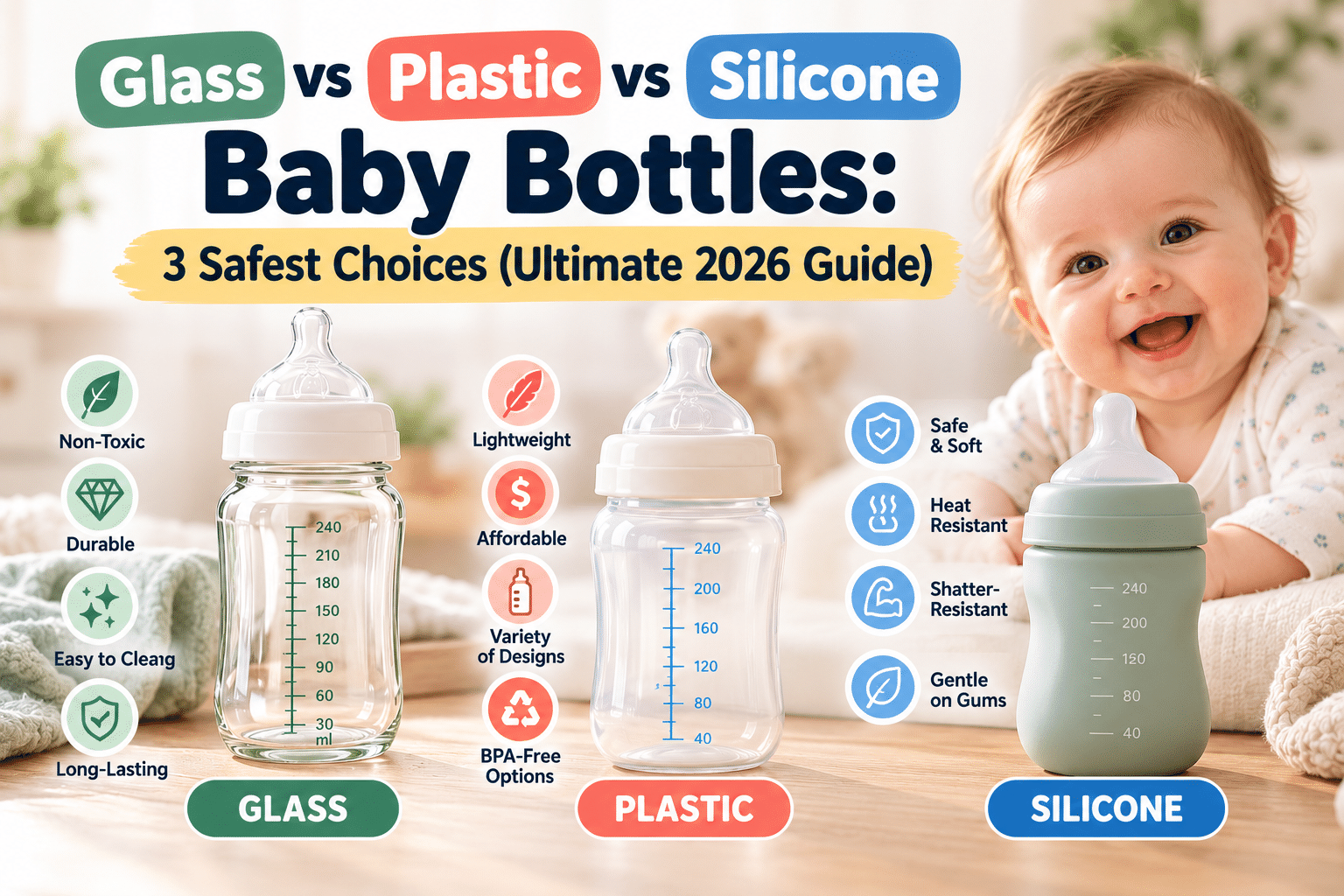
Glass vs Plastic vs Silicone Baby Bottles – Walking down the baby feeding aisle can feel overwhelming for new parents. You just want a safe, durable bottle that your baby will actually accept.
But before you even start worrying about nipple shapes or anti-colic vents, you face the first major hurdle: which material should you choose?
In the debate of glass vs plastic vs silicone baby bottles, there is no single “perfect” answer that fits every family. Each material has distinct advantages, specific safety profiles, and unique drawbacks when it comes to daily cleaning and traveling.
Are you worried about microplastics? Is glass too heavy for a squirmy six-month-old? Let’s break down the ultimate pros, cons, and safety facts of each material so you can make a confident decision.
Plastic Baby Bottles: The Lightweight Standard
Plastic is the most common and widely available baby bottle material on the market today. Modern plastic bottles are made from polypropylene (PP) or polyphenylsulfone (PPSU), which are rigorous and shatterproof.
Safety & Regulations
Since 2012, the FDA has banned the use of bisphenol A (BPA) in the manufacturing of baby bottles. Today, all major brands sold in the US and Europe are BPA-free. However, pediatricians still advise caution when heating plastics, as some studies suggest that extreme heat can release microplastics.
The Pros
- Extremely Lightweight: Easy for parents to hold during long feeds and safe for older babies.
- Shatterproof: They won’t break if dropped onto a hard tile floor.
- Budget-Friendly: Generally the most affordable option on the market.
- Travel-Friendly: The absolute best option for tossing into a diaper bag.
The Cons
- Scratches Easily: Abrasive cleaning can create micro-scratches where bacteria hide.
- Odor Retention: Plastic can absorb the smell of dish soap or become cloudy.
- Shorter Lifespan: Needs to be replaced more frequently (every 4-6 months).
Glass Baby Bottles: The Pure & Traditional Choice
Long before plastic dominated the market, glass was the ultimate standard. Today, glass bottles are making a massive comeback among health-conscious parents who want absolute purity.
Safety & Regulations
Medical-grade borosilicate glass is naturally free of BPA, BPS, and all petroleum-based chemicals. It is completely inert, meaning it won’t leach anything into the milk, regardless of how hot it gets.
The Pros
- Zero Chemical Leaching: The absolute safest material when exposed to high heat.
- Incredibly Durable: Glass won’t scratch, cloud, or absorb odors over time.
- Easy to Clean: Completely safe for all sterilization methods and dishwasher safe.
The Cons
- Heavy: Significantly heavier than plastic, which can be tiring during late-night feeds.
- Breakable: Although modern tempered glass is strong, it can still shatter if dropped.
- Less Travel-Friendly: The added weight makes a diaper bag noticeably heavier.
Silicone Baby Bottles: The Modern Hybrid
When evaluating glass vs plastic vs silicone baby bottles, silicone stands out as the ultimate modern hybrid. They combine the lightweight nature of plastic with the chemical safety of glass.
Safety & Regulations
High-quality food-grade silicone is free of BPA, PVC, and phthalates. Like glass, it is highly stable and does not release microplastics or chemicals when heated.
The Pros
- Soft & Squeezable: The squishy texture is comforting and closely mimics the breast.
- Lightweight & Unbreakable: Easy to transport and completely safe from shattering.
- Heat Resistant: Safe to boil and wash in the dishwasher without chemical leaching.
The Cons
- Can Tip Over: The flexible body means they are less stable on a flat counter.
- Slower Heating: Silicone takes slightly longer to warm in a bottle warmer.
- Attracts Lint: The grippy exterior texture can attract lint or pet hair.
Glass vs Plastic vs Silicone Baby Bottles: The Ultimate Verdict
Ultimately, choosing between glass vs plastic vs silicone baby bottles depends on your lifestyle.
- Choose plastic if you are on a strict budget, travel frequently, or need bottles for daycare.
- Choose glass if you prioritize maximum purity and plan to use a high-heat sterilizer daily.
- Choose silicone if you want the safety of glass but need the lightweight convenience of plastic.
A Pro Tip: Don’t commit to a massive set of just one material right away. Buy one of each to see which one your baby prefers.
Frequently Asked Questions (FAQ)
Are plastic baby bottles safe in 2026?
While modern plastic bottles are BPA-free, you should avoid high heat. To minimize microplastic exposure, do not pour boiling water into them or use them in a microwave.
How often should I replace plastic bottles?
You should replace them every 4 to 6 months. Replace them immediately if you notice any scratches or cloudiness.
How do I get the soapy smell out of silicone bottles?
Boil the bottles in water with a few tablespoons of white vinegar for 5 to 10 minutes, then let them air dry completely.
Ready to Choose the Perfect Bottle?
Now that you know which material is right for your family, it’s time to find the perfect bottle. We’ve rigorously evaluated the top brands for venting, nipple design, and ease of cleaning.