
💡 Evidence-Based Feeding Facts
📅 Updated for 2026
A Complete guide to Baby Bottle Nipple Sizes and Flow Rates
Baby Bottle Nipple Sizes and Flow Rate – Is your baby suddenly getting incredibly frustrated during feeding time?
You have bought the most expensive anti-colic bottle, warmed the milk perfectly, and created a calm environment, yet your baby is still crying and pulling away. Many new parents overlook one critical, hidden factor: baby bottle nipple sizes and flow rates.
Using the wrong nipple size can quickly turn a peaceful meal into a stressful, tear-filled struggle for both you and your infant.
If the flow is too slow, your baby will exhaust themselves sucking and fall asleep before getting enough calories. If the flow is too fast, your baby risks choking, swallowing excess air, and developing severe colic.
Let’s dive into the science of baby bottle nipple sizes and flow rates, and uncover the five proven signs that it is finally time to size up.
Understanding Baby Bottle Nipple Sizes and Flow Rates
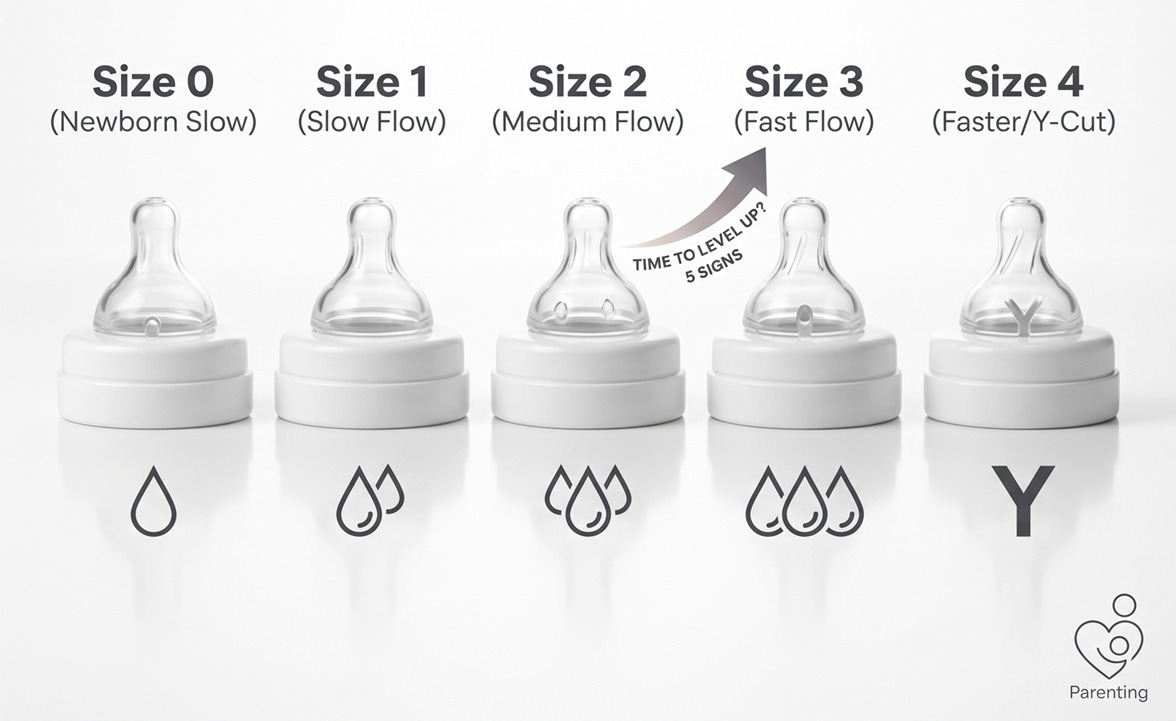
Every major bottle brand (like Dr. Brown’s, Philips Avent, or Comotomo) uses a tiered leveling system for their silicone nipples.
While the exact numbering can vary by brand, baby bottle nipple sizes and flow rates generally follow this standard progression:
- Preemie / Size 0: Extremely restrictive flow, designed for premature babies or newborns struggling with latching.
- Slow Flow / Size 1: The standard starting point for newborns (0-3 months) and the gold standard for all breastfed babies.
- Medium Flow / Size 2 or 3: Designed for growing infants (3-6 months) who have stronger sucking muscles.
- Fast Flow / Size 4+: Geared towards older babies (6+ months) who drink larger volumes quickly.
- Y-Cut / Variable Flow: Features a “Y” shaped slit instead of a round hole, allowing thickened liquids (like AR formula) to pass through safely.
5 Proven Signs It’s Time to Level Up Your Nipple Size
Age guidelines on the packaging are merely suggestions, not strict medical rules.
You should always follow your baby’s physical cues rather than the calendar on the wall.
Here are the five most reliable signs that you need to increase your baby bottle nipple sizes and flow rates:
1. Taking Longer Than 30 Minutes to Feed
A standard bottle-feeding session should take roughly 15 to 20 minutes.
If your baby is actively sucking for 30 to 45 minutes to finish a single bottle, the flow is much too slow and they are working too hard.
2. Nipple Collapsing During Feeds
Does the silicone nipple frequently flatten or invert while your baby is eating?
This happens because your baby’s sucking strength has outgrown the current flow rate, creating an intense vacuum that collapses the nipple.
3. Aggressive Tugging or Biting
Babies get very annoyed when milk doesn’t arrive fast enough.
If they start yanking on the bottle, pulling their head back forcefully, or biting down on the nipple out of frustration, they need a faster flow.
4. Falling Asleep Before Finishing
Eating from a restrictive bottle is physically exhausting for a growing infant.
If your baby consistently falls asleep halfway through their bottle (but wakes up hungry shortly after), they are burning too much energy trying to extract the milk.
5. Fidgeting and Kicking
A baby who is getting milk at a comfortable pace will usually be relaxed.
If they are constantly squirming, kicking their legs, or swatting at the bottle, it is a clear sign they are frustrated with the slow delivery speed.
The Great Debate: Leveling Up vs. Staying on Slow Flow
Should you blindly upgrade your baby’s nipple size just because they turned 3 months old? Not necessarily.
Let’s look at the pros and cons of sizing up your baby bottle nipple sizes and flow rates too quickly.
The Pros of Sizing Up
- Faster Feeds: Reduces overall feeding time, giving parents more time to rest.
- Less Frustration: Instantly stops the baby from crying, yanking, or getting angry during meals.
- Prevents Nipple Collapse: Eliminates the annoying vacuum effect inside the bottle.
- Supports Caloric Intake: Ensures older babies can easily drink the larger volumes they need to grow.
The Cons of Sizing Up Too Early
- Choking Hazard: If the flow is too fast, the baby will gag, cough, and spit up milk constantly.
- Increased Colic: Gulping milk quickly forces the baby to swallow excess air, leading to severe gas pains.
- Flow Preference: For breastfed babies, a fast bottle will make them lazy and cause them to reject the mother’s breast.
Breastfed Babies: The Ultimate Exception to the Rule
If you are exclusively pumping or alternating between the breast and the bottle, the rules change completely.
Lactation consultants strongly advise that breastfed babies should stay on a Slow Flow (Size 1) nipple indefinitely.
The human breast does not naturally increase its flow rate as the baby ages.
If you introduce a Medium or Fast flow nipple, the baby will quickly realize that the bottle is much easier than nursing.
This creates a “Flow Preference” (often mislabeled as nipple confusion), leading the baby to aggressively refuse the breast.
Frequently Asked Questions (FAQ)
How do I know if the nipple flow is too fast?
If the flow rate is too fast, your baby will gulp loudly, cough, sputter, or have milk constantly leaking out of the corners of their mouth. If you notice these signs, immediately size down.
Are baby bottle nipple sizes universal?
No, unfortunately they are not. A Size 1 (Slow Flow) from Philips Avent will have a completely different flow rate than a Size 1 from Dr. Brown’s. Always check the specific flow charts provided by your bottle’s manufacturer.
When should I use a Y-Cut nipple?
Y-Cut nipples are designed for thicker liquids. You should only use them if your pediatrician has recommended adding cereal to your baby’s bottle to treat severe acid reflux (AR), or if you are using specialized AR formula.
Ready to Find the Perfect Bottle?
Now that you understand exactly how to manage nipple sizes and flow rates, it’s time to choose the best vessel for your baby. We’ve rigorously evaluated the top brands for venting, latch acceptance, and ease of cleaning.