
💡 Suction Troubleshooting
📅 Updated for 2026
When to Replace Breast Pump Parts – It usually happens around month three.
You sit down for your regular pumping session, turn your machine on to your favorite setting, and realize the suction feels incredibly weak.
Worse, you look down at the collection bottles and see that your milk output has suddenly dropped by two or three ounces.
Panic sets in. You assume your milk supply is drying up, or that your expensive $200 breast pump motor has died.
But 90% of the time, the culprit is much smaller and cheaper: your silicone pump parts are stretched, warped, or torn.
Breast pump components—specifically duckbill valves, membranes, and backflow protectors—are subjected to extreme daily stress. Constant pulling, hot soapy water, and intense heat from UV sterilizers cause the delicate silicone to degrade rapidly.
Knowing exactly when to replace breast pump parts is the secret to maintaining strong suction and a high milk supply.
Let’s dive into the ultimate replacement cheat sheet so you never lose an ounce of milk to a faulty valve again.
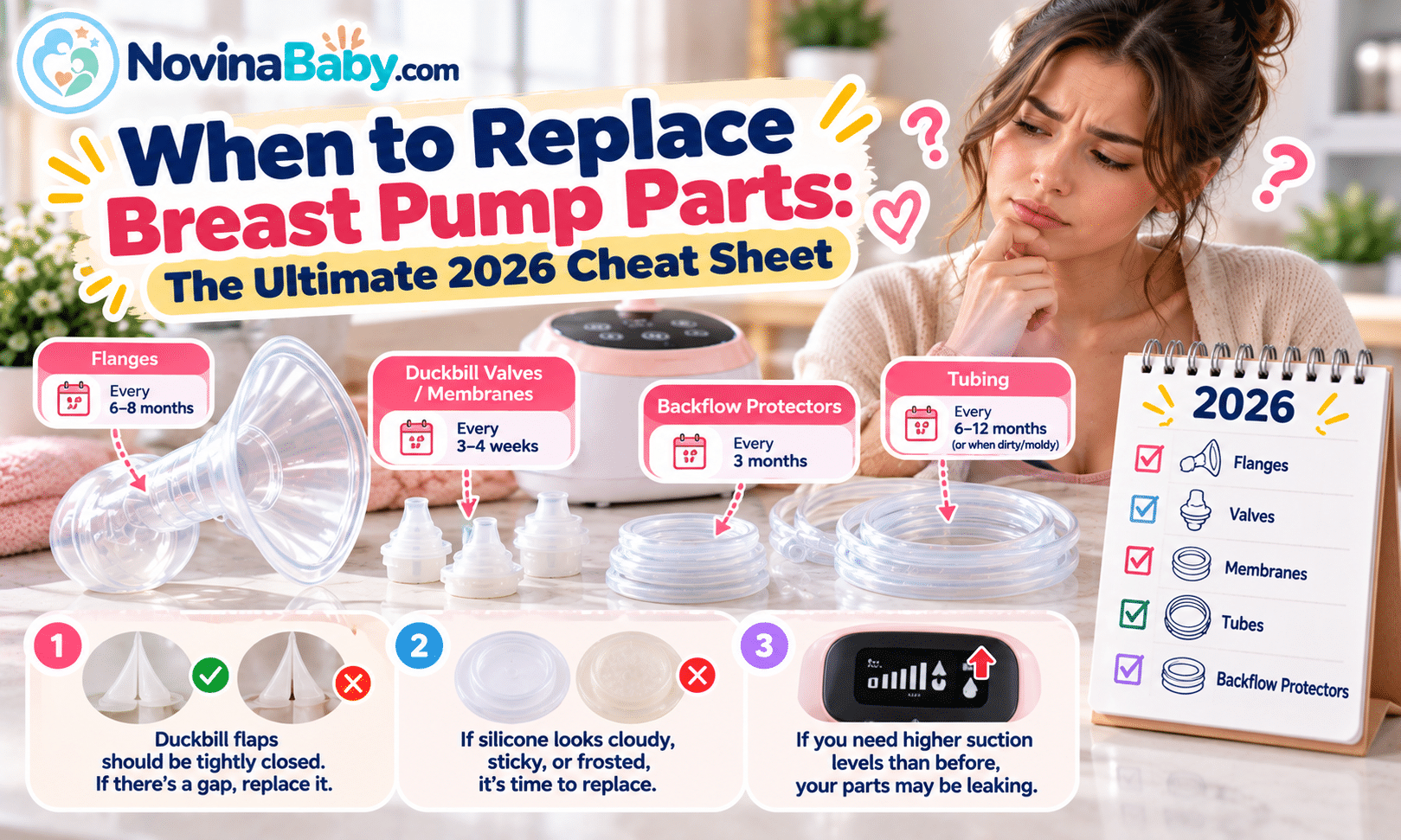
The Master Replacement Schedule (Cheat Sheet)
How often you need to replace parts depends entirely on how often you pump. An “Exclusive Pumper” (EP) who pumps 6 to 8 times a day will burn through silicone parts much faster than a mom who only pumps once a day for a freezer stash.
Here is the industry-standard replacement schedule based on your pumping frequency:
The Diagnostic Checklist: 3 Signs Your Parts Are Dead
Even with a schedule, harsh dish soaps or boiling water can kill your silicone parts faster than expected. Instead of guessing when to replace breast pump parts, look for these three visual and physical cues:
How to Extend the Life of Your Pump Parts
Replacing parts every month gets expensive. You can stretch the lifespan of your silicone components by washing them correctly.
- Stop Boiling Them: Constant exposure to boiling water degrades silicone incredibly fast. Only boil parts before their very first use. For daily cleaning, hot soapy water is perfectly safe.
- Never Scrub the Duckbill Slit: Do not shove a bottle brush through the bottom slit of the duckbill valve. This will tear the delicate flaps instantly. Gently rub the outside of the valve with your soapy fingers.
- Ditch the Fridge Hack (If Possible): While convenient, storing dirty parts in the cold fridge and then hitting them with warm milk causes the silicone to expand and contract repeatedly, wearing it out faster.
Frequently Asked Questions (FAQ)
Can I buy generic off-brand replacement parts on Amazon?
Yes! Brands like Maymom and Nenesupply make excellent, highly-rated replacement parts (duckbills, flanges, tubing) that are compatible with major brands like Spectra and Medela. They are often much cheaper than buying name-brand replacements and work just as well.
Do I ever need to wash or replace the plastic tubing?
If you have a closed-system pump (like Spectra or Momcozy), milk should never enter the tubing. Therefore, you do not need to wash the tubing. If you notice condensation (water droplets) inside the tube, simply run the pump motor for 5 minutes with the tubes attached but not connected to the flanges to dry them out.
Why do my hard plastic flanges need to be replaced?
Over months of heavy use and abrasive scrubbing, hard plastic flanges develop microscopic scratches. These scratches can harbor hidden bacteria and milk fat, causing a foul odor and increasing the risk of thrush or mastitis. They should be replaced every 6 months.
Is Your Pump Motor Actually Dying?
If you have replaced all your valves, membranes, and tubing, and your suction is still weak, your motor might have reached the end of its lifespan (typically 1 year of heavy use). If it is time for an upgrade, we’ve rigorously tested the market for the strongest hospital-grade motors and the most durable smart wearables.