
📊 Evidence-Based Supply Logic
📅 Updated for 2026
The Ultimate Exclusive Pumping Schedule for Newborns – Exclusive Pumping (EP) is often described as a labor of love that requires the stamina of an endurance athlete. You are essentially doing double duty: pumping the milk for 20 minutes, and then immediately spending another 20 minutes bottle-feeding it to your baby.
During the newborn phase (weeks 1 through 12), your body is entirely dependent on regular, frequent stimulation to understand exactly how much milk it needs to produce. If you do not remove milk often enough, your brain assumes the baby does not need it, and your supply will permanently drop.
Finding a realistic exclusive pumping schedule is the only way to establish a robust milk supply without completely sacrificing your sleep and mental health.
Let’s break down the biological “Rule of 8,” explore a highly structured 24-hour newborn pumping chart, and discuss exactly when you can safely start dropping sessions.
The Biological “Rule of 8” for Newborns
To successfully EP for a newborn, you must mimic the behavior of a ravenous baby. Pediatricians and IBCLCs agree that newborns feed between 8 and 12 times a day.
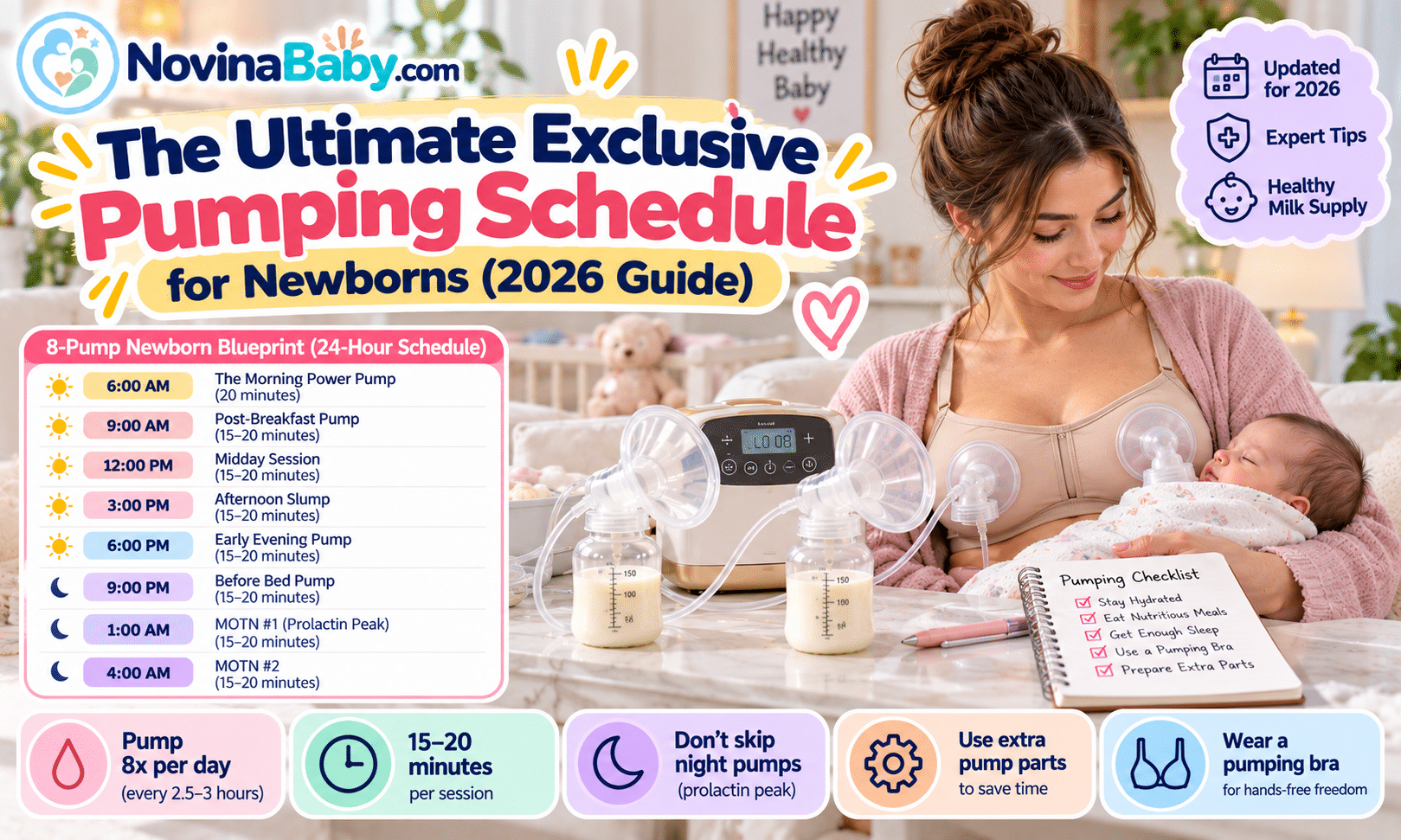
Therefore, your exclusive pumping schedule must include a minimum of 8 pumping sessions per 24 hours for the first 12 weeks. This translates to pumping roughly every 2.5 to 3 hours around the clock.
Each session should last between 15 and 20 minutes (or until milk stops flowing), meaning you will spend approximately 160 minutes attached to your pump every single day.
Sample 24-Hour Newborn EP Schedule (8 Pumps/Day)
Flexibility is key. You do not need to pump at the exact minute listed below, but you should strive to keep the gaps between sessions relatively even to prevent engorgement and blocked ducts.
3 Golden Rules for EP Survival
Adhering to an exclusive pumping schedule can easily lead to burnout. To survive the first three months, you must implement these efficiency hacks:
Frequently Asked Questions (FAQ)
When can I safely drop from 8 pumps down to 6 pumps?
Most IBCLCs recommend waiting until your supply is fully “regulated.” This typically occurs between 10 and 12 weeks postpartum. Your breasts will stop feeling constantly hard or engorged, and your daily output will become highly predictable. At this point, you can usually drop to 6 pumps per day without losing volume.
What if I accidentally oversleep and miss a night pump?
Do not panic. Missing one pump will not instantly dry up your milk. When you wake up, your breasts will likely be very full. Pump immediately for a slightly longer duration (25-30 minutes) to fully drain the breasts and clear any potential clogged ducts.
Can I use a wearable pump (like Elvie or Momcozy) for exclusive pumping?
While highly convenient, wearables have smaller motors. Using them exclusively in the first 12 weeks can lead to incomplete emptying and a lower supply. Use a strong hospital-grade desktop pump for your morning and night sessions, and rely on wearables for midday multitasking.
Do You Have the Right Machine for the Job?
An exclusive pumping schedule requires a heavy-duty, durable machine. A cheap, weak motor will fail after a month of 8x/day usage and destroy your milk supply in the process. We’ve rigorously tested the market for the best hospital-grade desktop pumps and the most reliable smart wearables that can withstand an EP lifestyle.