
🔬 Science-Backed Data
📅 Updated for 2026
The Ideal Breast Milk Temperature – It is the most common late-night guessing game for new parents: standing in the dim light of the kitchen, pulling a bottle out of the warmer, and nervously wondering, “Is this too hot? Is this too cold?”
When transitioning a baby from the breast to a bottle, temperature is often the deciding factor in whether the baby eagerly accepts the meal or aggressively pushes it away. Babies are highly sensitive creatures of habit, and the comforting warmth of milk is deeply associated with the safety of their mother’s body.
However, finding the ideal breast milk temperature is not just about keeping your baby happy; it is a critical matter of nutritional preservation and physical safety. Treating a baby bottle like a hot cup of adult coffee is one of the most dangerous, nutrient-destroying mistakes a caregiver can make.
Let’s dive into the exact biological temperature you should be aiming for, the science of what happens when milk gets too hot, and how to accurately test the liquid without needing a kitchen thermometer at 3:00 AM.
The Magic Number: What is the Ideal Breast Milk Temperature?
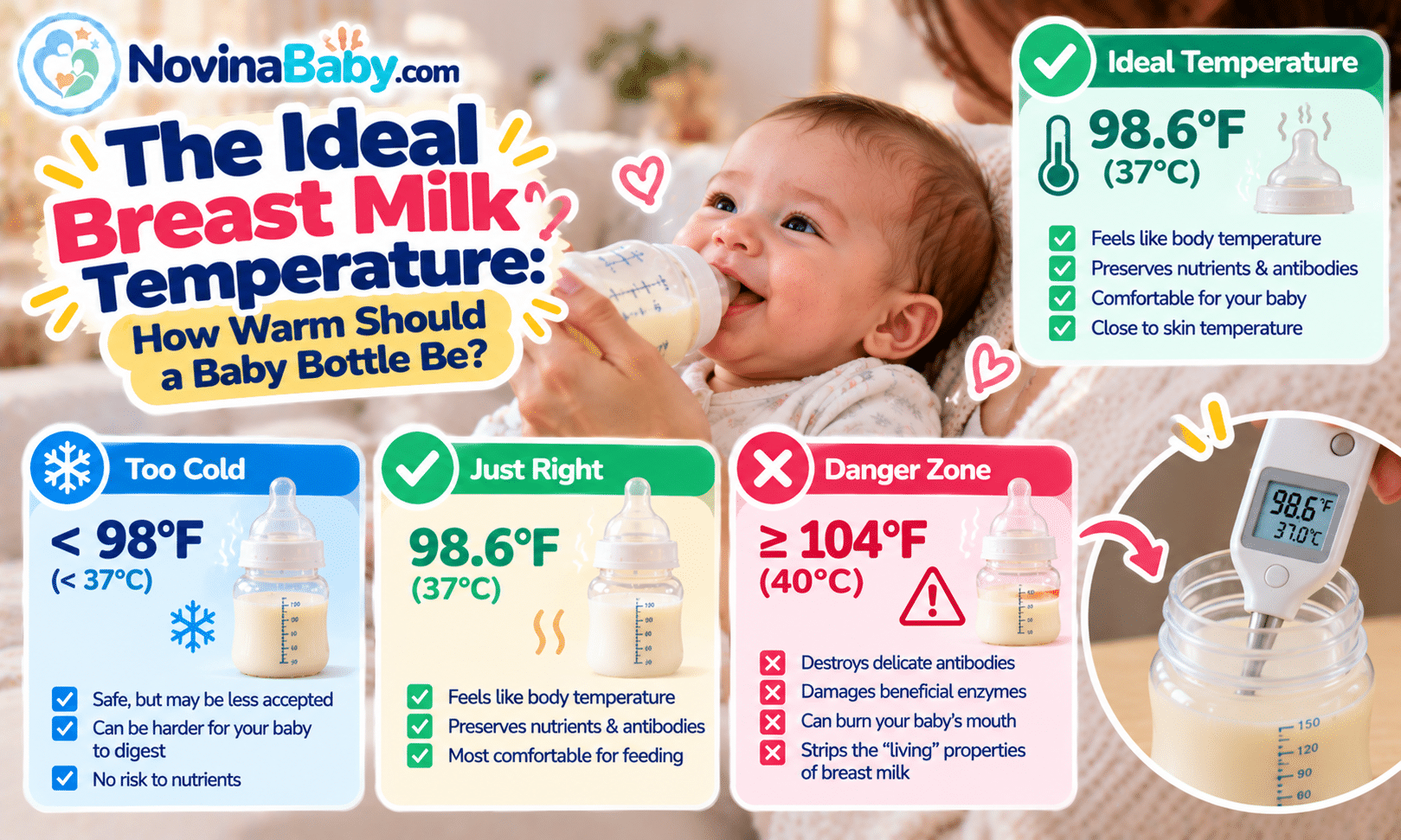
The goal of warming a bottle is simple: you are trying to replicate the exact conditions of nursing directly from the human body. Therefore, the absolute perfect target temperature for a baby bottle is 98.6°F (37°C)—average human body temperature.
When breast milk flows directly from the breast, it is exactly 98.6°F. It is not piping hot, and it does not produce steam. It is simply a cozy, neutral warmth.
While 98.6°F is the “gold standard” for mimicking nature, pediatricians agree that you do not need to hit this exact decimal point. Any temperature ranging between room temperature (around 68°F/20°C) and body temperature (98.6°F/37°C) is perfectly safe and widely accepted by most infants.
🌡️ The Danger Zone: 104°F (40°C) and Above
Unlike infant formula, which is essentially powdered food, breast milk is a living biological fluid. It contains active white blood cells, digestive enzymes, and delicate antibodies (IgA) that protect your baby’s immature immune system.
Clinical studies show that once breast milk is heated past 104°F (40°C), the molecular structure begins to break down. The heat permanently denatures the proteins and kills the live immunological cells. If you accidentally heat the milk to 120°F or higher, you are effectively feeding your baby “dead” milk that has lost its superpower to fight off respiratory infections and gut bacteria.
How to Perform the “Wrist Test” Correctly
You do not need to sterilize a digital meat thermometer to check your baby’s bottle. For generations, parents have relied on the “Wrist Test”—but many parents misinterpret what they are supposed to be feeling.
The skin on our fingertips and palms is thick and heavily calloused, meaning it is terrible at gauging subtle temperature changes. The skin on the inside of your wrist (the volar forearm) is incredibly thin, sensitive, and packed with nerve endings, making it the perfect biological thermometer.
- Swirl the Bottle: Never shake breast milk violently. Gently swirl the bottle in circles for 10 seconds. This remixes the separated fat and ensures the heat is evenly distributed, preventing hidden hot spots.
- The Drop Test: Unscrew the cap slightly or use the nipple to squeeze 2 to 3 drops of milk directly onto the pale skin of your inner wrist.
- Evaluate the Sensation: This is where parents make mistakes. You should NOT feel heat. The milk should feel completely neutral. It should feel like nothing is there, because the liquid is the exact same temperature as your own blood.
If the milk feels noticeably warm or “hot” to your adult skin, it is dangerously hot for your baby’s fragile mouth. Let it cool on the counter for 5 to 10 minutes before testing again.
Cold Milk vs. Room Temperature Milk: Is It Safe?
When discussing the ideal breast milk temperature, we must address the ultimate parenting shortcut: skipping the warmer entirely.
There is a persistent cultural myth that feeding a baby cold milk straight from the refrigerator will cause gas, stomach cramps, or severe colic. The American Academy of Pediatrics has thoroughly debunked this. Cold milk is 100% medically safe for an infant’s digestive tract.
If your baby is happy to drink a chilly 40°F bottle, you have hit the parenting jackpot. You can safely pull a bottle from the fridge and feed them instantly, completely eliminating the risk of overheating the milk.
However, many babies will aggressively reject cold milk. The sudden chill is a massive shock to an infant who expects the 98.6°F comfort of the breast. If your baby refuses a cold bottle, try letting it sit on the counter for 20 minutes to take the “chill” off and reach room temperature (around 68°F). Often, room temperature is the perfect compromise between the baby’s comfort and the parents’ convenience.
How to Achieve the Perfect Temperature Every Time
If your baby demands warm milk, you need a reliable system to heat it up without accidentally destroying the nutrients. There are a few core methods to achieve this safely.
First, you must understand the dangerous mistakes parents make when warming baby bottles. You must never use a kitchen microwave. Microwaves heat liquids from the inside out, creating invisible, boiling hot spots that can cause third-degree burns to your baby’s throat.
Instead, use these approved methods:
- The Manual Water Bath: Fill a large mug with warm (not boiling) tap water. Submerge the sealed bottle in the water for 5 to 10 minutes. This is a slow, gentle method that protects the milk, though it is frustratingly slow at 3:00 AM. For a deeper dive into this technique, read our full guide on how to safely warm breast milk.
- A Smart Electric Bottle Warmer: This is the most reliable option for sleep-deprived parents. A high-quality electric warmer uses an internal thermostat to gently heat a water bath, automatically shutting off the moment the milk reaches the safe 98.6°F threshold. However, be cautious when choosing your device; our breakdown of water bath vs steam bottle warmers explains why steam technology can sometimes be too aggressive for delicate breast milk.
The Ideal Breast Milk Temperature (FAQ)
Can I use a digital cooking thermometer to check the milk?
While you technically can, it introduces a severe contamination risk. Unless you are boiling and sterilizing the metal probe of the meat thermometer before every single use, you are introducing foreign kitchen bacteria directly into your baby’s sterile milk. The standard wrist test is vastly safer and more practical.
Does formula need to be warmed to the same exact temperature?
No. Infant formula is highly resilient because it is not a “living” fluid like breast milk. While you still must never overheat it to prevent mouth burns, you do not have to worry about destroying delicate antibodies. Many parents simply mix formula with room-temperature distilled water and serve it instantly.
How do I transition my baby to drink colder milk?
If you want to stop using a bottle warmer, transition your baby gradually. Over the course of two weeks, warm the bottle slightly less each day. Let them get used to lukewarm milk, then room-temperature milk, until you can eventually serve it straight from the fridge without a tantrum.
Is it normal for the milk to separate after warming?
Yes, breast milk naturally separates, with the thicker fat (hindmilk) rising to the top. Warming the milk actually helps these fats melt and recombine with the watery foremilk. Just remember to swirl it gently—never shake—before serving.
Stop Guessing the Temperature at 3 AM
Knowing the ideal breast milk temperature is only half the battle. Achieving that exact temperature safely and quickly is where modern technology saves your sanity. We have rigorously tested the market to identify the absolute best smart bottle warmers that feature automatic shut-off sensors to guarantee your baby’s milk is a perfect 98.6°F, every single time.