
🛡️ Formula Safety Standard
📅 Updated for 2026
Does Baby Formula Need to Be Warmed? (Pediatrician Guidelines) – It is the middle of the night. You are holding a crying, squirming baby in one arm while awkwardly trying to measure scoops of formula powder with your free hand. You mix the bottle using cold water from the fridge, and then you face the agonizing wait: staring at the bottle warmer as the minutes tick by.
In that moment of extreme exhaustion, every parent has asked themselves the exact same question: “Does baby formula actually need to be warmed?”
There is a persistent cultural expectation that a baby’s bottle must always be delightfully warm. Generations of parents have passed down warnings that cold milk will upset a baby’s stomach, cause painful gas, or trigger endless nights of colic.
But what does modern pediatric science actually say?
The truth will likely save you hours of sleep. Let’s break down the biological facts about infant digestion, the mechanical science of mixing formula powder, and the strict safety guidelines you must follow when preparing a bottle for your newborn.
🩺 The Medical Truth: Cold Formula is 100% Safe
Let’s put the biggest myth to rest right now. The American Academy of Pediatrics (AAP) explicitly states that babies do not biologically or medically require warm milk. Feeding your baby cold formula straight from the refrigerator will not cause stomach cramps, it will not cause gas, and it certainly does not cause colic.
An infant’s digestive system is fully capable of processing cold, room temperature, or warm liquids with the exact same efficiency. The temperature of the milk is purely a matter of personal preference—both yours and your baby’s.
If It Isn’t Necessary, Why Do We Warm Bottles?
If cold milk is perfectly safe, why does the entire baby industry sell highly advanced bottle warmers? There are three very practical reasons why most parents still choose to heat their baby’s formula.
1. The Familiarity of Nature
Breast milk naturally exits the human body at 98.6°F (37°C). If you are combo-feeding (offering both the breast and formula bottles), your baby is biologically conditioned to expect their meals to be body temperature. A sudden mouthful of 40°F refrigerator water can be a massive shock, causing the baby to aggressively reject the bottle.
2. The Science of Mixing Powder
Infant formula powder dissolves significantly better in warm water than it does in ice-cold water. If you try to mix a bottle using chilled water, you will often find stubborn, sticky clumps of dry powder trapped in the nipple or at the bottom of the bottle. Warm water ensures a smooth, fully integrated liquid, which actually helps prevent the baby from swallowing air bubbles caused by vigorous shaking.
3. The Sleep-Inducing Comfort
Think about how a warm mug of chamomile tea or hot chocolate makes you feel on a cold night. Warm liquids have a natural, soothing, soporific effect. A warm bottle helps relax a baby’s nervous system, making it much easier to transition them back to sleep after a 3:00 AM feeding.
3 Dangerous Heating Mistakes Formula Feeders Make
If you decide that warming the formula is the best path for your family, you must do it safely. Formula is much more resilient than breast milk (it doesn’t have live antibodies that can be destroyed by heat), but severe safety risks still apply.
When preparing your baby’s meals, you must avoid these common mistakes parents make when warming bottles:
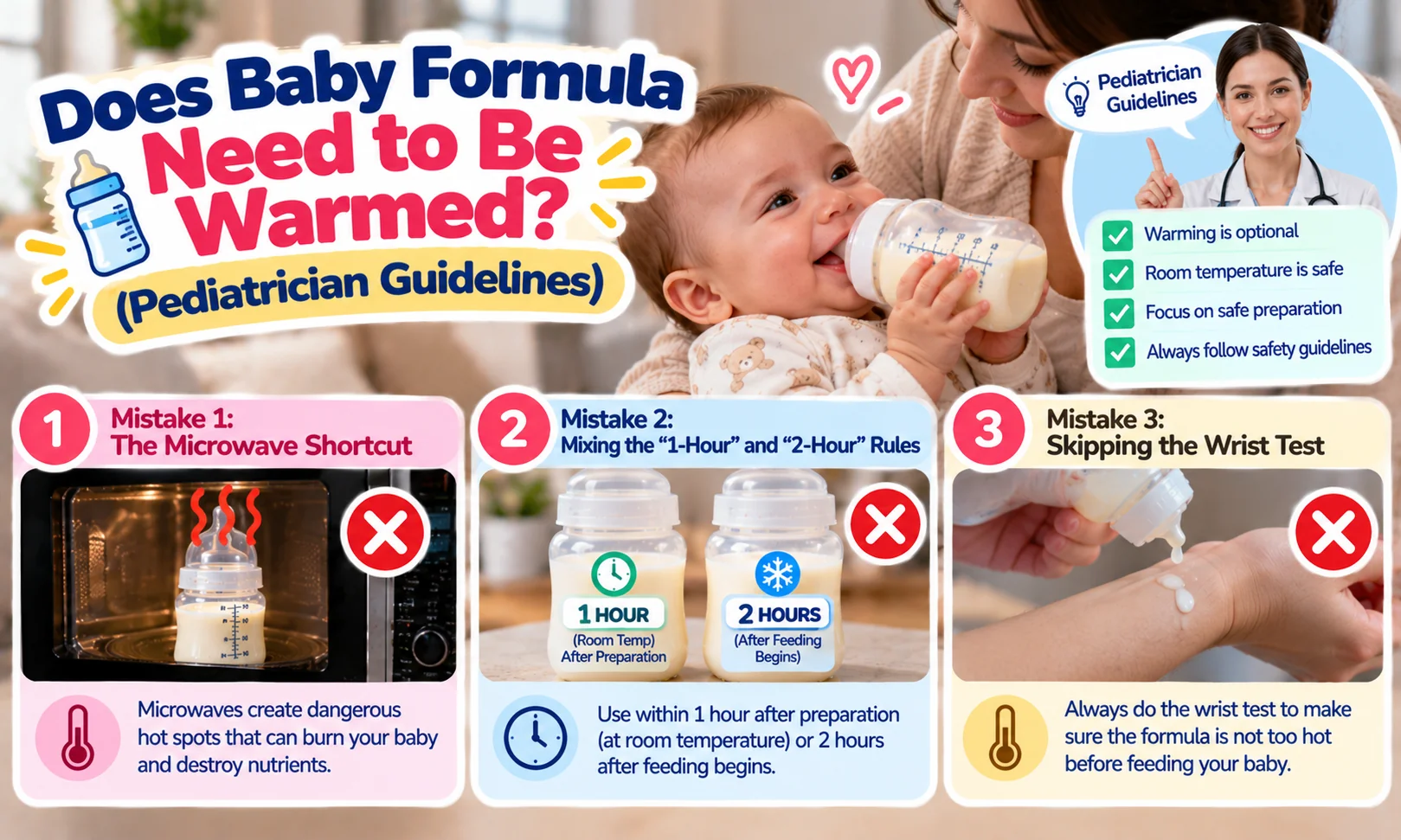
❌ Mistake 1: The Microwave Shortcut
Never, ever put a baby bottle in the microwave. Microwaves heat liquids unevenly. The plastic bottle might feel cool in your hands, but the formula inside could have hidden pockets of boiling liquid that will instantly cause third-degree burns to your baby’s throat.
❌ Mistake 2: Mixing the “1-Hour” and “2-Hour” Rules
This is a massive point of confusion. Breast milk can sit out for 2 hours once a baby starts drinking it. Formula is different. Because formula lacks the active antibacterial properties of human milk, it spoils faster. The CDC strictly mandates that once a baby’s mouth touches a formula bottle, any leftover liquid must be thrown in the sink after exactly 1 hour. You cannot put it back in the fridge to reheat later.
❌ Mistake 3: Skipping the Wrist Test
Just because formula can handle higher heat without losing nutritional value doesn’t mean it should be served hot. Always squirt a few drops on the inside of your wrist. It should feel completely neutral (body temperature). If it feels noticeably hot to your adult skin, it is dangerously hot for an infant.
The Best Ways to Heat Formula Safely
If you want to provide a comforting, warm meal without the risks, you have a few excellent options.
The Pitcher Method: Many formula-feeding parents make a large batch of formula in a mixing pitcher every morning and store it in the fridge (it stays fresh for 24 hours). When the baby is hungry, they pour 4 ounces into a bottle and place it in a dedicated bottle warmer. Because you are not worried about destroying live antibodies, you can safely choose between a water bath vs steam warmer. Steam warmers are incredibly popular for formula because they can heat a chilled bottle in under 90 seconds.
The 24-Hour Keep Warm Hack: If you use powdered formula on demand, look for a bottle warmer that doubles as a water kettle. These devices hold sterilized water at a constant 98.6°F all day and night. At 3 AM, you simply pour the perfectly warm water into the bottle, add the powder, shake, and serve instantly. Just remember to maintain the machine; read our guide on how to clean a bottle warmer to prevent hard water buildup.
Frequently Asked Questions (FAQ)
How long can un-warmed formula sit out?
If you mix a fresh bottle of formula using room-temperature water, and the baby has not touched it yet, it can sit safely on the kitchen counter for up to 2 hours. If it has been warmed, or if the baby takes even a single sip, that safe window immediately drops to 1 hour.
Can I heat baby formula twice?
No. You should never reheat a bottle of formula. The initial warming process brings the liquid to an optimal temperature for bacteria to multiply rapidly. If you chill it and heat it a second time, the bacterial load will be dangerously high and can cause severe food poisoning.
How do I get my baby to drink cold formula?
If your baby is used to warm milk, you cannot switch to refrigerator-cold milk overnight. Transition them slowly. First, try serving the milk at room temperature for a few days. Once they accept that, try mixing it slightly cooler. Never force it; some babies simply have a strong preference for warmth.
Does warming formula destroy its nutrients?
Unlike breast milk (which contains live cells that die at 104°F), modern infant formula is highly heat-stable. Gently warming it in a water bath or steam warmer will not destroy the vitamins or minerals. However, actively boiling the formula can degrade certain vitamins like Vitamin C.
Make Formula Feeding Effortless
Whether you want to heat a chilled bottle in under 90 seconds or keep a reservoir of water perfectly warm 24/7 for instant mixing, the right equipment changes everything. We have rigorously tested the market to identify the absolute best smart bottle warmers specifically designed to make formula preparation fast, safe, and completely foolproof.