
💧 Liquid Barrier Safety
📅 Updated for 2026
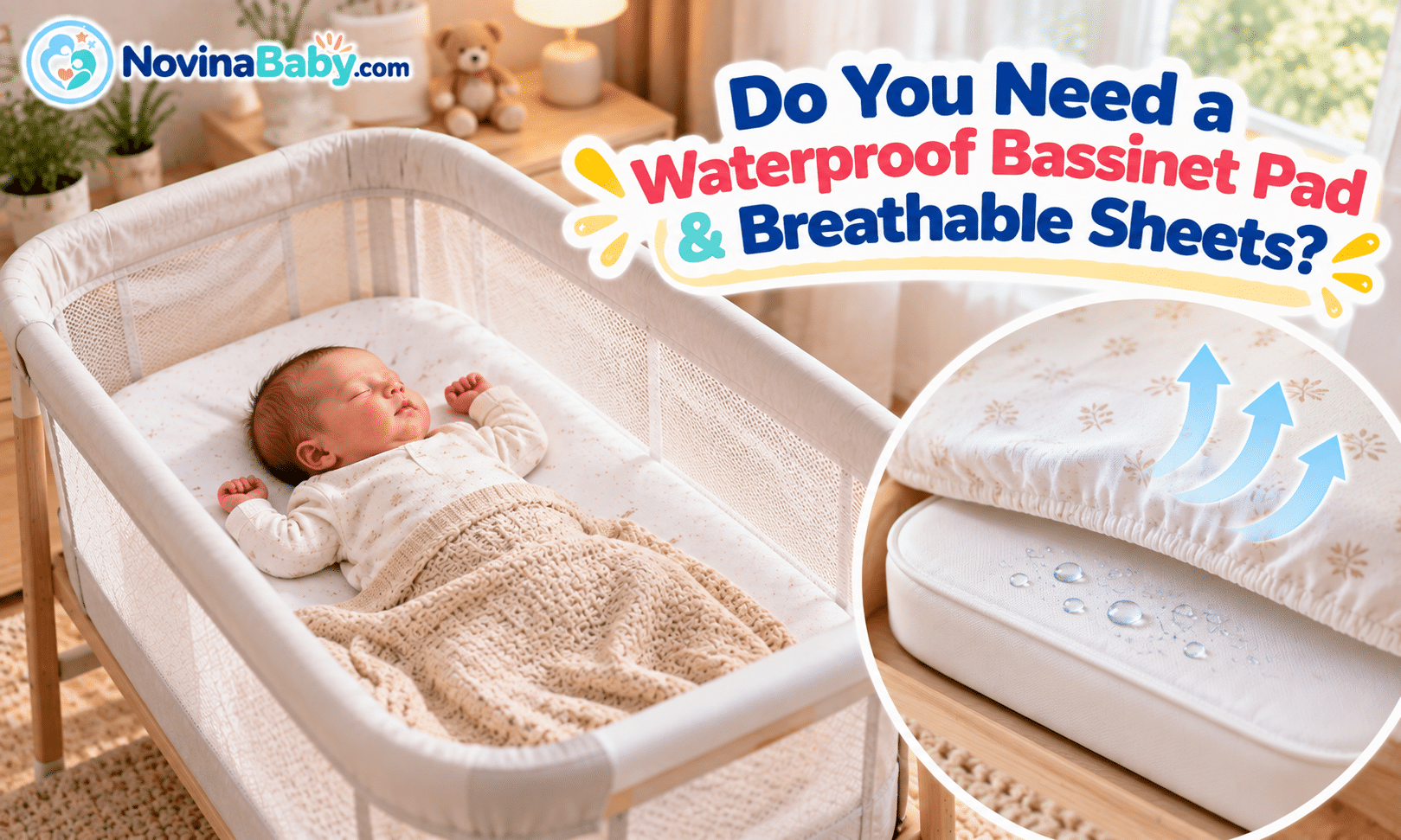
Waterproof Bassinet Pad & Breathable Sheets – If there is one universal truth about newborns, it is that they are master fluid-production machines. Between explosive middle-of-the-night blowouts, heavy midnight spit-up episodes, and unexpected milk leaks from bottles, your baby’s bassinet will be subjected to a constant barrage of moisture.
When you unbox a brand-new bassinet, you will quickly notice that the thin, factory-provided foam mattress pad is usually covered in a basic, non-waterproof fabric shell. If your baby spits up directly onto that raw pad, the fluid soaks straight through to the core foam, creating a breeding ground for mold, mildew, and lingering odors that cannot be easily washed out.
This reality drives many parents to search for waterproof protectors and breathable sheets. However, wading through marketing claims can be confusing. Are waterproof bassinet mattress pads safe for newborns? Do you really need specialized breathable sheets, or will any old cotton pillowcase do?
Let’s examine the safety regulations, evaluate the risks of trapped heat and moisture, and help you choose the right combination of protection and breathability for your bassinet.
The Reality of Newborn Messes: Why Protection Matters
Some parents wonder if they can get away with using just the standard sheet that comes in the box. Unfortunately, standard bassinet sheets are rarely waterproof. Within your baby’s first week at home, you will likely experience a 3:00 AM blowout that drenches all the way through to the wooden or plastic floorboard of the bassinet.
When fluids penetrate an unprotected foam core, two major problems occur:
- Bacterial and Mold Growth: Bassinets sit in master bedrooms where humidity fluctuates. Trapped moisture inside dark foam creates an ideal microclimate for mold spores and dust mites.
- Permanent Odors: Sour milk and formula proteins that soak deep into synthetic foam cannot be scrubbed out with standard soap, resulting in a persistent sour smell right next to your baby’s face.
Using a protective barrier is essential, but how you protect the mattress must strictly align with infant safety rules.
Are Waterproof Bassinet Mattress Pads Safe?
Yes, waterproof mattress pads are safe—provided they are specifically engineered for infant dimensions and fit flush without bunching.
Never take a waterproof protector designed for an adult mattress, fold it in half, and cram it into a bassinet. Loose, oversized waterproof pads create dangerous ripples, creases, and slack beneath the sheet. If a baby’s face rolls against a bunched-up pad, it can block their nose and mouth.
🛡️ What to Look For in a Bassinet Protector
- Custom-Fit Dimensions: Buy a protector made exclusively for your specific bassinet model (e.g., Halo BassiNest waterproof pad or universal oval/rectangle pads matching your exact dimensions).
- Low-Profile TPU Backing: Look for pads that use a thin thermoplastic polyurethane (TPU) membrane rather than old-school, crinkly vinyl or plastic sheets that trap excessive heat and make loud crackling noises every time the baby moves.
- Elasticized Skirts: Choose protectors that wrap entirely around the edges of the mattress pad with deep, tight elastic corners, exactly like a fitted sheet.
Do You Need “Breathable” Sheets? (Fact vs. Marketing)
In recent years, the baby market has been flooded with high-end “breathable” mesh sheets and multi-layered 3D-knit mattress covers (popularized by brands like Newton Baby). They carry a hefty price tag, often ranging from $40 to $80 per sheet.
Are they a mandatory purchase, or clever marketing?
To understand their purpose, you have to look at federal safety standards. All legal, CPSC-certified bassinets sold in the U.S. already require breathable mesh perimeter walls to ensure airflow even if an infant presses against the side. Therefore, standard 100% cotton, jersey knit, or bamboo fitted sheets are completely safe and compliant, provided they fit tightly.
However, specialized breathable 3D-spacer sheets offer a distinct advantage: enhanced vertical airflow. These sheets feature a textured, honeycomb weave that leaves a tiny air gap between the baby’s skin and the waterproof pad below. If a baby rolls face-down, air can circulate freely through the weave, offering extra peace of mind for anxious parents.
Standard Cotton & Bamboo Sheets 👍
|
Specialized 3D Breathable Sheets 🌟
|
The 3 Rules of Safe Bassinet Layering
When dressing your bassinet, improper layering is one of the most common bassinet safety mistakes parents make. Follow this exact 3-step layering protocol to protect your mattress without violating safe sleep rules:
- Layer 1 (The Base): The original, firm foam mattress pad provided by the bassinet manufacturer. Never remove this or swap it for an aftermarket cushion.
- Layer 2 (The Barrier): Your custom-fit waterproof mattress protector, pulled taut over the pad with all four elastic corners securely locked underneath.
- Layer 3 (The Surface): Your tightly fitted cotton, bamboo, or breathable 3D mesh sheet. Run your hand across the center; it should feel drum-tight with zero loose fabric folds.
Never place loose waterproof changing pad liners, puppy pads, or quilted blankets on top of the fitted sheet. If a baby’s face lands on a loose pad, it can obstruct their airway.
Waterproof Bassinet Pad Breathable Sheets (FAQ)
How many bassinet sheets and waterproof pads should I buy?
We recommend owning at least 3 waterproof pads and 4 fitted sheets. When a blowout or massive spit-up happens at 3:00 AM, the last thing you want to do is stand at the washing machine waiting for laundry to dry before you can put your baby back to sleep.
Can I use standard crib sheets on a bassinet?
No. Standard crib sheets (52″ x 28″) are far too large for a compact bassinet (which is usually around 32″ x 20″). Trying to tuck excess crib sheet fabric underneath a bassinet mattress creates loose, bunched material that poses a severe suffocation hazard. Always buy sheets specifically sized for your bassinet’s dimensions.
Do waterproof mattress pads make babies sweaty or overheat?
Cheap, low-quality vinyl or plastic protectors can trap body heat and cause a baby to sweat. To prevent this, invest in waterproof pads that use breathable TPU membranes or organic cotton top layers combined with air-channel backing.
When should I transition my baby out of the bassinet entirely?
Regardless of your bedding setup, all bassinets have a strict developmental expiration date. The moment your baby begins rolling over, pushing up on their hands and knees, or hits the manufacturer’s weight limit (usually 15–20 lbs), you must transition your baby from bassinet to crib.
Protect Your Sleep Sanctuary From Blowouts & Spills
Equipping your bassinet with the right waterproof pads and tightly fitted sheets keeps your mattress pristine and your baby safe all night long. Explore our ultimate guide to find the top-rated CPSC-certified bassinets designed for easy cleaning and maximum breathability.