
🌿 Safe for Baby Remedies
📅 Updated for 2026
How to Soothe Sore and Blistered Nipples from Pumping – There is a dangerous myth in the motherhood community that breastfeeding and pumping are “supposed to hurt” at first, and that you simply need to toughen up and push through the pain.
This is medically false, and it leads to incredible suffering.
If you wince every time you turn on your breast pump, or if you are noticing raw skin, blood in your milk, or painful white blisters (blebs), your body is waving a massive red flag.
Dealing with sore nipples from pumping is one of the leading reasons mothers quit providing breast milk altogether. The extreme friction caused by hard plastic rubbing against the most sensitive skin on your body can cause severe tissue trauma.
Before you pack away your pump for good, you need an immediate intervention. Let’s break down the fast, effective, and baby-safe remedies to heal your broken skin, and how to fix the mechanical issue causing the pain in the first place.
Step 1: Fix the Root Cause (Why Does it Hurt?)
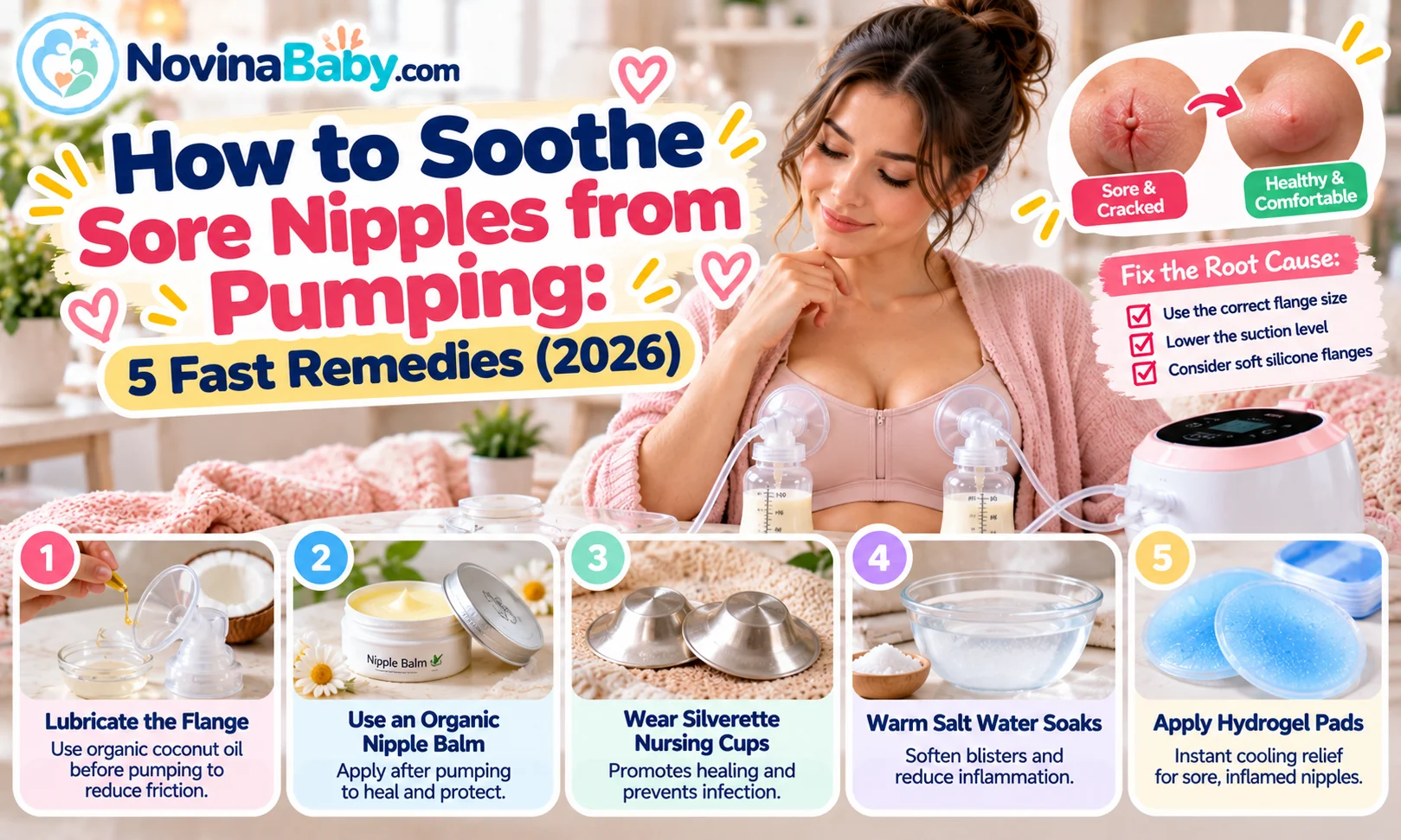
Healing your skin is useless if you are just going to damage it again during your next session in three hours. Before applying any creams, you must address the mechanical failure:
- Check Your Flange Size: 90% of pumping pain is caused by using the standard 24mm flange that came in the box. If it is too small, your nipple rubs the sides like sandpaper. If it is too big, your areola gets sucked in and bruised. Measure your nipples and buy the correct silicone inserts.
- Lower the Suction Level: More suction does not equal more milk. High suction collapses your milk ducts and restricts flow. Keep the pump on a low, comfortable setting.
- Identify “Elastic Nipples”: If your nipple stretches all the way down the plastic tunnel and hits the back valve, you have elastic tissue. Hard plastic will always hurt you. You must switch to soft, silicone flanges (like Pumpin’ Pals or Liquid Shields).
5 Fast Remedies to Heal the Pain
Once your flange size is corrected, it is time to perform triage on your damaged skin. Here are the top five proven methods to treat sore nipples from pumping safely:
Frequently Asked Questions (FAQ)
Can I still pump if my nipples are bleeding?
Yes. While it is incredibly painful for you, breast milk with a small amount of blood in it (often called “strawberry milk”) is completely safe for your baby to drink. However, you must immediately address the cause of the bleeding to prevent a serious infection.
Do I need to wash off nipple cream before my baby nurses or I pump again?
It depends on the product. 100% pure lanolin and most organic, plant-based nipple butters are food-grade and completely safe for your baby to ingest. You do not need to scrub them off (which would just damage your skin further). Always check the manufacturer’s label to confirm.
Why do my nipples turn white and throb after I finish pumping?
This is a condition called “Vasospasm.” It occurs when the blood vessels spasm and constrict, often triggered by the sudden temperature change when the warm pump flange is removed and the wet nipple hits the cold air. Applying a warm, dry compress immediately after pumping can stop the throbbing.
Is Your Pump the Problem?
If you have tried all the remedies and your nipples are still bruised, your pump motor might be too harsh or you might need a machine that utilizes soft silicone flanges. We’ve rigorously tested the market for the gentlest, most comfortable hospital-grade motors and wearables designed specifically for sensitive tissue.