
💡 Evidence-Based Sizing
📅 Updated for 2026
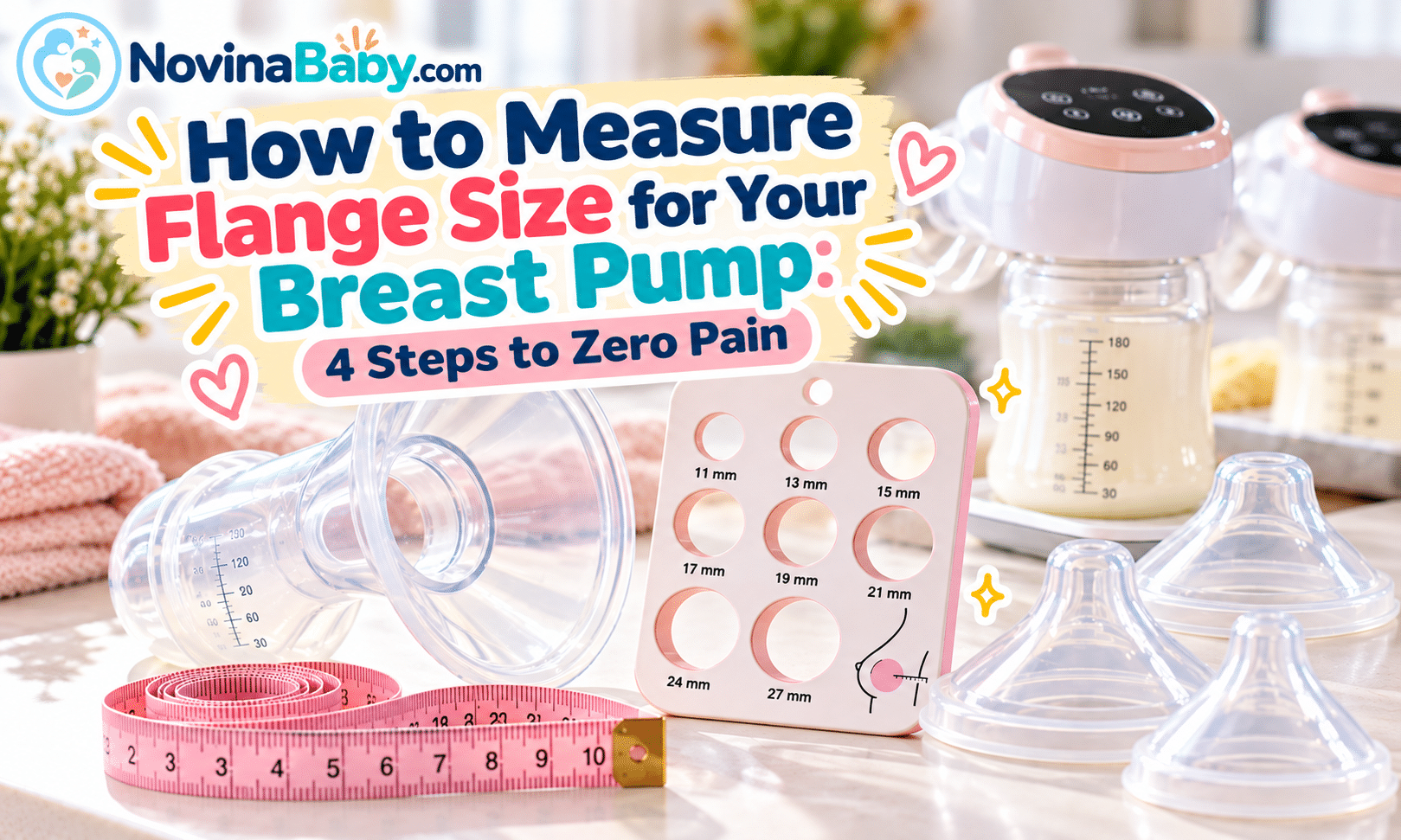
How to Measure Flange Size for Your Breast Pump – If you dread every single pumping session because it feels like your nipples are being pulled through a cheese grater, you are not alone.
A staggering majority of new mothers assume that extreme pain, cracked skin, and blistering are just a normal part of the breastfeeding and pumping journey.
They are not. If pumping hurts, the problem is almost always mechanical: you are using the wrong flange size.
Most breast pumps come out of the box with a standard 24mm or 28mm hard plastic flange. However, just like shoe sizes, nipples come in a massive variety of diameters, and a 24mm shield is far too large for the average woman.
Understanding exactly how to measure flange size is the single most important step to achieving a painless pumping routine and maximizing your daily milk output.
Let’s break down exactly why sizing matters, how to measure yourself at home using simple tools, and how to visually check if your current setup is damaging your tissue.
Why Incorrect Flange Size Ruins Your Milk Supply
The flange (also known as a breast shield) is the funnel-shaped plastic or silicone piece that cups your breast and creates the vacuum seal.
If you fail to learn how to measure flange size and use a shield that is completely wrong for your anatomy, you will face two major biological consequences:
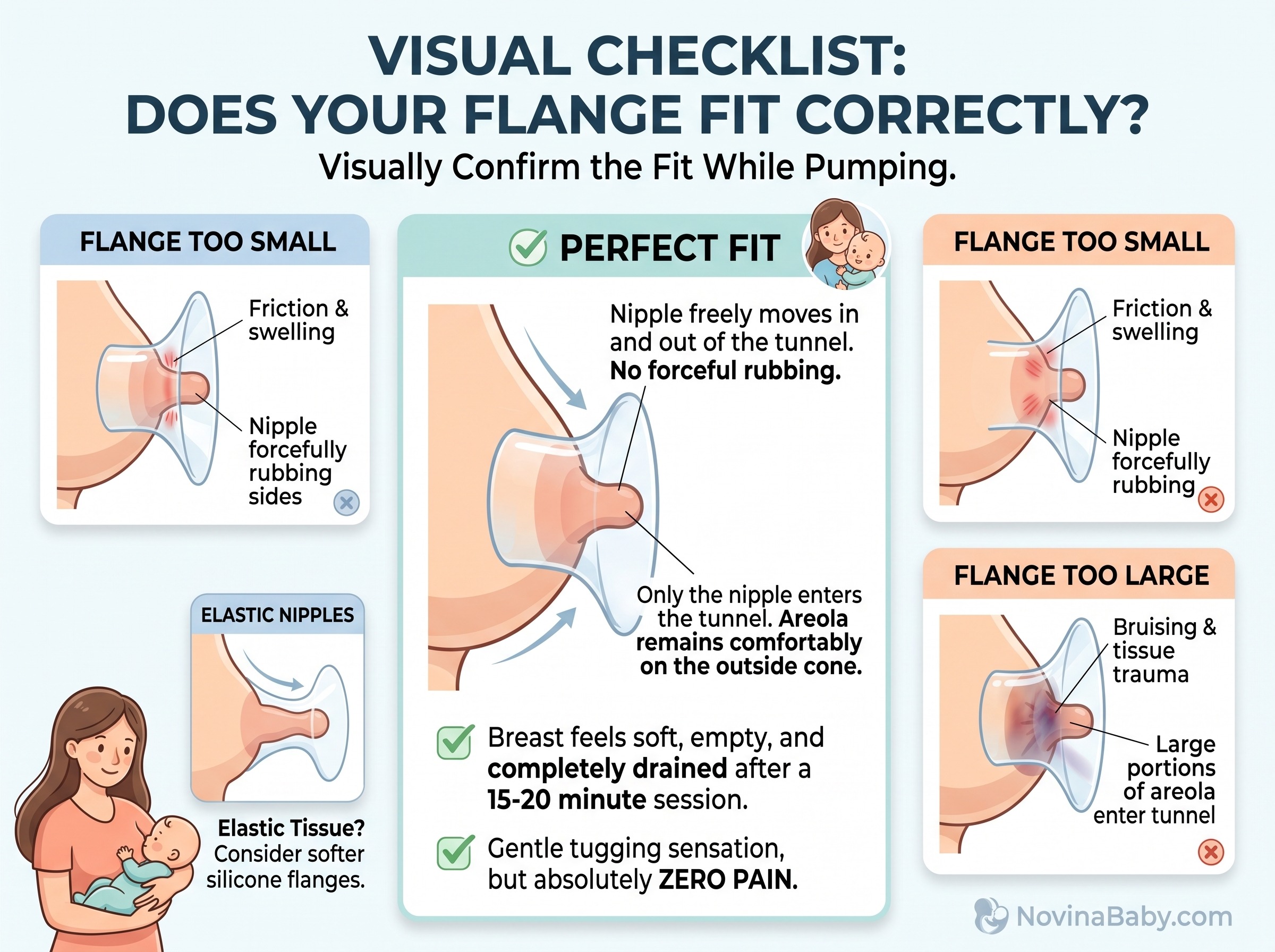
- If the Flange is Too Small: The sides of your nipple will rub aggressively against the hard plastic tunnel with every single pump. This friction causes severe swelling, raw blisters, and blocked milk ducts, actively preventing the milk from flowing out.
- If the Flange is Too Large: The pump will suck large portions of your sensitive areola (the dark skin around the nipple) into the narrow tunnel. This causes dark bruising, extreme tissue trauma, and fails to compress the actual milk ducts located right at the base of the nipple, resulting in a drastically lower milk supply.
4 Simple Steps to Measure Your Flange Size at Home
You do not need to visit a doctor to figure this out. You only need a metric ruler (or a cheap silicone nipple measuring tool), a mirror, and a quiet room.
Follow these four IBCLC-approved steps to find your exact size:
Visual Checklist: Does Your Flange Fit Correctly?
Even if you know exactly how to measure flange size, you still need to visually confirm the fit while the pump motor is running.
Turn your pump on and observe the plastic tunnel. Here is what a perfect fit looks like:
- The nipple moves freely in and out of the tunnel without forcefully rubbing against the sides.
- Only the nipple enters the tunnel. Your areola should remain comfortably on the outside cone of the flange.
- Your breast feels soft, empty, and completely drained after a 15 to 20-minute session.
- You feel a gentle tugging sensation, but absolutely zero pain.
Frequently Asked Questions (FAQ)
What if my breast pump only came with a 24mm flange?
This is the most common issue. You do not need to buy an entirely new pump. You can purchase cheap silicone “flange inserts” on Amazon. If you measure at 17mm, you simply buy a 17mm silicone insert and slide it directly into your pump’s oversized 24mm plastic shield to narrow the tunnel.
Do nipple sizes change over time?
Yes! Your nipple size can drastically change throughout your breastfeeding journey. They are often swollen and larger immediately postpartum, and may shrink slightly by month three. It is highly recommended to remeasure your flange size every two months if you notice a drop in milk supply.
What are “Elastic Nipples” and how do they affect sizing?
Elastic nipples stretch incredibly far down the flange tunnel during suction, sometimes hitting the back valve. If you have highly elastic tissue, standard hard plastic flanges might always hurt. You should consider switching to fully silicone, ultra-soft flanges (like Pumpin’ Pals or Liquid Shields) to prevent tissue trauma.
Ready to Upgrade Your Pumping Game?
Now that you know exactly how to measure flange size to prevent pain, it is time to pair that knowledge with a powerful, highly efficient machine. We’ve rigorously tested the market for the best hospital-grade motors and discreet smart wearables that prioritize your physical comfort.